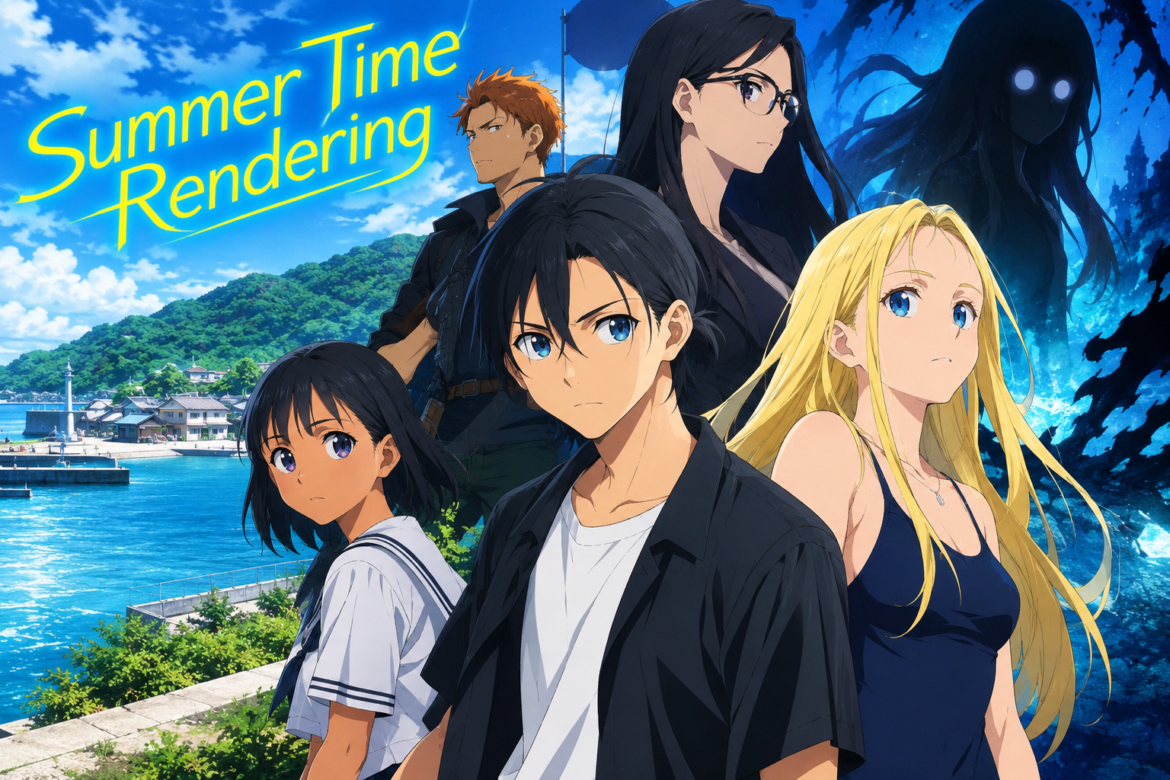
What Is Summer Time Rendering?
Summer Time Rendering is a Japanese mystery, thriller, and supernatural series that combines time travel, suspense, action, and emotional storytelling into one tightly connected narrative. Originally created by Yasuki Tanaka, the story follows Shinpei Ajiro, a young man who returns to his home island after learning that his childhood friend Ushio Kofune has died in what initially appears to be a tragic accident.
Instead of finding closure, Shinpei soon discovers that Ushio’s death is connected to a mysterious phenomenon involving strange copies of people, dangerous shadows, and events that seem to repeat themselves. As he tries to understand what is happening, he realizes that his own ability to return to an earlier point in time may be the key to changing the outcome. The series uses this unusual premise to create a suspenseful story in which every decision can alter the future, while hidden clues from earlier events gradually become meaningful.
The Story Behind Summer Time Rendering
The story begins when Shinpei returns to Hitogashima, the island where he spent part of his childhood. He has been living away from the island, but the death of Ushio brings him back for her funeral. Ushio was someone extremely important to Shinpei, and her death deeply affects him. However, while attending the funeral and speaking with people who knew her, Shinpei begins to notice inconsistencies surrounding the circumstances of her death. The idea of a “shadow” becomes particularly important when he learns about rumors involving mysterious duplicates that look exactly like real people. These shadows are not simple supernatural illusions. They are connected to a larger threat that has been operating on the island for a long time.
As Shinpei investigates, the situation becomes increasingly dangerous. He discovers that certain events are connected in ways he could never have predicted. Even more importantly, he learns that his death does not necessarily mean the end of his story. When Shinpei dies under particular circumstances, he is sent back to an earlier point in time. This creates the central time-loop mechanic of Summer Time Rendering. Instead of experiencing one continuous timeline, Shinpei has opportunities to return and make different choices. However, the ability is not an unlimited advantage. Each loop provides new information, but the enemies are also capable of changing their behavior. This means Shinpei must carefully remember what happened previously and use that knowledge to survive.
Why the Time-Loop Concept Works So Well
One of the strongest elements of Summer Time Rendering is the way it uses time travel as a storytelling device rather than simply as a visual gimmick. Shinpei’s ability to return to an earlier moment gives the audience opportunities to revisit familiar situations from different perspectives. A scene that initially appears ordinary can become extremely important after Shinpei learns new information in a later loop. Likewise, a character who seems trustworthy in one timeline may become suspicious after the audience discovers what that character is capable of doing.
The time-loop structure also creates a strong sense of urgency. Normally, a protagonist who dies would simply lose the battle, but Shinpei’s situation is different. He can sometimes return, yet every return carries consequences. He needs to understand where he started, what information he has gained, and how much time he has before critical events occur. This gives the series a strategic quality because Shinpei is constantly trying to solve a complicated puzzle while facing enemies who can adapt. The result is a story where knowledge becomes one of the most important weapons.
Shinpei Ajiro as the Main Character
Shinpei Ajiro is at the center of the story, and his character development is one of the reasons the series remains engaging. At the beginning, Shinpei is primarily motivated by grief and a desire to understand what happened to Ushio. He does not initially know that he has entered a supernatural conflict. As the story progresses, however, he becomes increasingly determined, analytical, and courageous. Every time he returns to the past, he carries memories of experiences that other characters do not remember. This creates an unusual burden because Shinpei must make difficult decisions based on knowledge that he cannot always explain to others.
His personality also helps balance the darker aspects of the story. Shinpei is not presented as an unbeatable hero. He makes mistakes, becomes frightened, and sometimes struggles with the emotional consequences of his choices. His strength comes from his willingness to learn from previous failures. Instead of simply becoming stronger physically, he becomes more effective because he understands the situation better. This makes his progression feel connected to the central mystery of the series.
Ushio Kofune and Her Importance to the Story
Ushio Kofune is one of the most important characters in Summer Time Rendering, even though the story begins with her death. Her relationship with Shinpei forms the emotional foundation of the narrative. As Shinpei investigates what happened to her, he discovers that the truth surrounding Ushio is far more complicated than he originally believed. Her personality, memories, relationships, and connection to the island all become important pieces of the larger mystery.
Ushio is also significant because the series uses her character to explore questions about identity. What makes someone the same person? Is a copy with the same appearance necessarily the same individual? Can memories and emotions define a person more strongly than their physical body? These questions appear throughout the series and give the supernatural plot a deeper emotional dimension. Ushio’s role therefore goes beyond being a motivation for the protagonist. Her story becomes part of the central mystery itself.
The Mysterious Shadows
The shadows are one of the defining concepts of Summer Time Rendering. They are mysterious duplicates capable of imitating human beings, and their existence transforms the island into a place where appearances can no longer be trusted. The fear comes from the fact that a person may look exactly like someone the protagonist knows while actually being something entirely different.
This concept allows the series to create tension in ordinary conversations and situations. A familiar face is no longer automatically comforting. A character’s behavior may seem slightly different, and the audience begins looking for clues that could reveal whether someone is genuine. The shadow concept also fits naturally with the show’s themes of memory, identity, and repetition. Since Shinpei himself repeatedly experiences different versions of events, the existence of copies creates a fascinating parallel between supernatural duplication and temporal repetition.
Hitogashima as More Than a Setting
Hitogashima is not simply a background location for the story. The island plays a major role in establishing the atmosphere of Summer Time Rendering. Its isolated environment makes the supernatural events feel more intense because the characters cannot simply leave whenever danger appears. The island has its own history, traditions, relationships, and secrets, which gradually become important as Shinpei investigates.
The contrast between the island’s beautiful summer environment and the increasingly disturbing events is particularly effective. Beaches, forests, houses, and quiet roads can appear peaceful, yet they may become locations associated with danger in another timeline. This contrast gives the series a distinctive visual and emotional atmosphere. The title itself reflects this combination of summer scenery and an increasingly dark mystery.
The Role of Mystery and Investigation
Summer Time Rendering is structured like a mystery as much as it is a supernatural action story. Shinpei does not receive all the answers at once. Instead, he collects information through conversations, observations, repeated events, and dangerous encounters. Every loop can reveal another piece of the puzzle.
The investigation encourages viewers to pay attention to small details. A character’s statement, an unusual event, or a minor change in behavior can become significant later. Because the story involves multiple timelines, information that seems unimportant during one part of the narrative may suddenly become essential. This creates a rewarding viewing experience for people who enjoy stories that require concentration and encourage them to think about how different clues connect.
The Anime Adaptation
The anime adaptation of Summer Time Rendering brought the story to a wider international audience and was praised for its combination of mystery, action, suspense, and animation. The adaptation follows the core story while using visual direction, sound, character performances, and pacing to make the supernatural atmosphere more immediate.
One of the advantages of animation is the ability to visually distinguish normal reality from the strange events surrounding the shadows and time loops. Action sequences can become intense without losing the mystery elements, while quieter scenes allow the emotional relationships between characters to develop. The anime also benefits from the natural tension created by knowing that Shinpei may have another opportunity after death, but not necessarily enough opportunities to solve everything safely.
The Manga and Original Source
Summer Time Rendering originated as a manga written and illustrated by Yasuki Tanaka. The manga was serialized digitally through Shueisha’s Shonen Jump+ platform and eventually completed its story. This is important because readers can experience the entire narrative as a finished work rather than waiting indefinitely for the conclusion.
The manga’s structure makes the progression of the mystery especially effective. Because the story was designed around interconnected events, early details can gain additional meaning as the plot advances. Readers who enjoy analyzing foreshadowing may find the series particularly satisfying because its major mysteries are connected rather than introduced randomly.
Themes of Identity and Memory
Beyond its supernatural elements, Summer Time Rendering explores the meaning of identity. The existence of shadows raises questions about whether physical appearance is enough to define a person. If a duplicate can reproduce someone’s appearance and memories, what separates the original from the copy?
Memory is equally important. Shinpei’s ability to retain information between timelines gives him an advantage, but it also separates him from everyone around him. He remembers deaths, conversations, and tragedies that other characters may never experience in the current timeline. This creates emotional pressure because he carries memories of events that technically no longer exist.
The story therefore treats memory as both a weapon and a burden. Knowing more can help Shinpei save people, but it can also make his journey emotionally difficult. The series uses this conflict to make the time-loop mechanic feel personal rather than purely technical.
Action and Suspense in Summer Time Rendering
Although mystery is one of its strongest features, Summer Time Rendering also contains significant action. Once Shinpei understands that the shadows are a serious threat, survival becomes a major part of the story. Characters must react quickly, plan their movements, and cooperate when possible.
The action works particularly well because it is connected to information. Shinpei does not simply win because he is stronger than his opponents. He often succeeds because he remembers what happened in previous timelines. This creates an interesting combination of physical danger and intellectual strategy. A battle can change dramatically when Shinpei knows something that his opponent does not expect him to know.
Why the Series Feels Different From Ordinary Time-Travel Stories
Many time-travel stories focus on changing history or preventing one major disaster. Summer Time Rendering uses a more localized and personal approach. The story concentrates heavily on one island, a group of interconnected characters, and a specific supernatural threat. This limited environment allows the creators to explore the consequences of repeated events in considerable detail.
Another difference is that the protagonist does not have complete control over time. Shinpei’s ability has boundaries, and understanding those boundaries becomes part of the mystery. He cannot simply reset whenever he wants and experiment without consequences. Every loop matters. This limitation prevents the time-travel mechanic from making the story too easy and maintains genuine tension.
The Importance of Supporting Characters
The supporting cast of Summer Time Rendering contributes significantly to the story’s appeal. Characters such as Sou Hishigata, Tokiko Hishigata, Tetsu Totsumura, Ginjiro Nezu, and others become important to Shinpei’s investigation and survival. Each character has different knowledge, abilities, motivations, and relationships with the island.
The supporting characters also make the time loops emotionally meaningful. Shinpei is not simply trying to solve a puzzle for himself. He is trying to prevent people he cares about from dying. When events change across timelines, the audience can see how even small differences affect the lives of multiple people. This makes the story feel larger than a single protagonist’s journey.
The Meaning of Summer in the Series
Summer is more than a seasonal reference in the title. The story uses summer as part of its atmosphere and emotional identity. Bright skies, warm weather, beaches, and island scenery create an inviting setting that contrasts strongly with the horror and mystery developing underneath the surface.
This contrast is one of the series’ most memorable characteristics. The island can look beautiful while hiding terrifying secrets. The ordinary feeling of a summer holiday is repeatedly interrupted by danger, death, and uncertainty. As a result, the title Summer Time Rendering captures both the physical setting and the strange relationship between time, memory, and repetition that defines the story.
Why Fans Enjoy Summer Time Rendering
Fans often appreciate Summer Time Rendering because it combines several genres without allowing one element to completely overwhelm the others. It has the suspense of a mystery, the fear of supernatural horror, the excitement of an action series, and the emotional investment of a character-driven drama. The time-loop structure adds another layer by encouraging viewers to remember details and anticipate future developments.
The pacing is another major strength. The story introduces questions early and gradually reveals answers while creating new questions. Because Shinpei’s situation changes whenever he returns to the past, the narrative can revisit familiar events without simply repeating them. Each return usually provides new information or changes the circumstances in an important way.
What Makes the Story Worth Watching or Reading
For people who enjoy mystery stories, Summer Time Rendering offers a particularly engaging experience because the central mystery is connected to the characters’ personal lives. The supernatural threat is not separate from the emotional story. Shinpei’s investigation is driven by his relationship with Ushio, while other characters become involved because they have their own connections to the island and its secrets.
The series is also appealing to viewers who enjoy stories that reward attention. Details can matter, and remembering previous events can help the audience understand later developments. Rather than explaining every mystery immediately, the story allows uncertainty to build before providing answers. This approach makes major revelations more satisfying.
Summer Time Rendering and Its Lasting Appeal
Summer Time Rendering has established itself as a memorable modern supernatural mystery because it combines an unusual premise with strong emotional stakes. The story begins with a simple tragedy—the death of a childhood friend—but quickly expands into a complex conflict involving time, identity, copies, memory, and survival. Shinpei’s repeated attempts to change the outcome give the narrative a distinctive structure, while Ushio and the supporting characters provide the emotional foundation that keeps the story from becoming only a puzzle.
Its greatest strength may be the way its different elements support one another. The time loops make the mystery possible, the mystery creates suspense, the shadows create horror, and the characters give the events emotional meaning. Hitogashima provides the perfect isolated setting, while the summer atmosphere creates an effective contrast with the darker events. Together, these elements make Summer Time Rendering more than a conventional supernatural thriller.
Conclusion: Why Summer Time Rendering Stands Out
Summer Time Rendering is a compelling blend of supernatural mystery, time travel, action, suspense, and emotional drama. Through Shinpei Ajiro’s journey, the series explores what happens when a person receives the opportunity to revisit tragedy but discovers that changing the future is far more complicated than simply knowing what happened before. The mysterious shadows add a powerful identity-based conflict, while the island setting creates an atmosphere that can shift from peaceful to frightening in moments.
For audiences who enjoy carefully constructed mysteries and stories with time-loop mechanics, Summer Time Rendering offers plenty to discover. Its characters are connected to the central mystery, its supernatural elements serve the plot rather than existing only for spectacle, and its themes of memory and identity give the story additional depth. Whether experienced through the manga or anime adaptation, Summer Time Rendering remains an engaging example of how a familiar time-travel idea can be transformed into a tense and emotionally driven mystery.
You Many Also Read: Lia Gerardini



1 thought on “Summer Time Rendering: Story, Characters, Themes, and Everything You Need to Know”