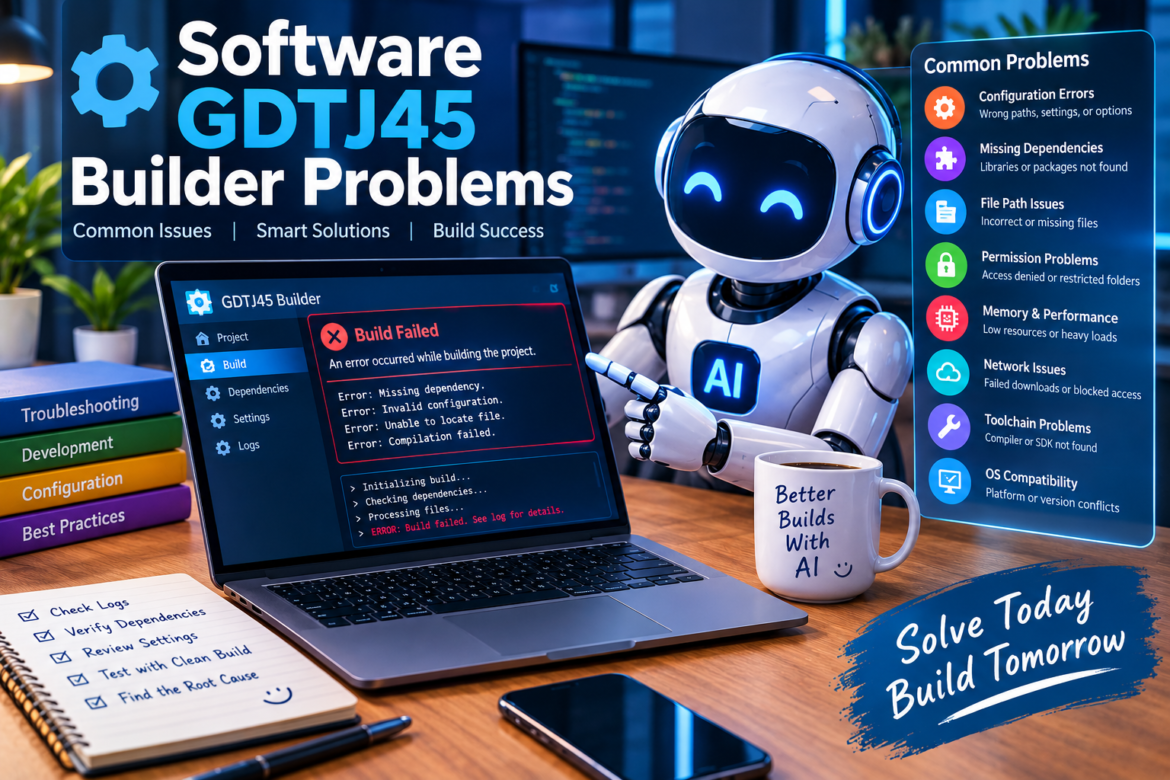
Software development tools are designed to make digital projects easier to build, test, manage, and maintain. However, even specialized builders can experience technical difficulties that affect productivity and project performance. The keyword “software gdtj45 builder problems” can be associated with situations where users encounter errors, configuration difficulties, compatibility concerns, or unexpected behavior while working with a software builder referred to as GDTJ45. Understanding these problems is important because technical issues can sometimes appear confusing when there is little documentation or when several different causes produce similar symptoms.
Software builders generally depend on multiple components working together correctly. These may include the development environment, libraries, operating system, project files, configuration settings, dependencies, and hardware resources. If one component is outdated, incorrectly configured, or incompatible with another component, the builder may fail to work as expected. This means that identifying the exact source of a software gdtj45 builder problems requires a structured troubleshooting process rather than simply reinstalling the software or changing random settings.
Understanding Software GDTJ45 Builder Problems
The first step toward solving software GDTJ45 builder problems is understanding what a builder actually does. A software builder typically takes project files, source code, assets, configurations, and dependencies and processes them into a usable application or package. During this process, the builder may perform compilation, validation, resource processing, packaging, optimization, or other automated tasks. A problem at any stage can prevent the final output from being generated correctly.
Users may notice a problem when the builder refuses to start, stops during processing, produces error messages, creates incomplete output, or generates an application that does not behave properly. In some cases, the software may appear to complete the build successfully while the resulting project contains missing files or unexpected functionality. These differences make troubleshooting especially important because the visible symptom may not reveal the actual cause.
Common Configuration Problems
Configuration errors are among the most common reasons a software builder may fail. Builders often rely on configuration files that define project paths, output directories, dependencies, compiler options, environment variables, and other settings. A single incorrect path or unsupported option can cause the build process to stop.
A configuration problem may occur after moving a project from one computer to another. A project that works perfectly on one system might contain references to folders or resources that do not exist on another system. Similarly, changing the installation location of a dependency can cause previously valid paths to become incorrect. Checking configuration files carefully can therefore be an important part of diagnosing software gdtj45 builder problems.
Compatibility Issues and Software Versions
Another potential cause of software gdtj45 builder problems is compatibility between software versions. Development tools are frequently updated, and a project created using one version may not always work perfectly with another. Changes to programming languages, libraries, APIs, build systems, or operating-system components can introduce compatibility problems.
If a software gdtj45 builder problems-related project suddenly stops building after an update, version compatibility should be considered. The problem may not necessarily mean that the newest version is defective. Instead, the project may depend on an older component or configuration that has changed. Reviewing recent updates and comparing the current environment with the previously working environment can help narrow down the issue.
Dependency-Related Builder Errors
Modern software gdtj45 builder problems projects commonly depend on external libraries and packages. These dependencies provide functionality without requiring developers to create everything from scratch. However, they can also create additional points of failure. If a required dependency is missing, corrupted, outdated, or incompatible, the builder may report an error.
Dependency problems can sometimes be difficult to identify because the error may mention a secondary component rather than the actual source of the failure. For example, a project might fail because one library requires another library that is unavailable. A systematic review of dependency versions and installation status can help determine whether this is contributing to the problem.
Missing Files and Incorrect Project Paths
Missing files are another common cause of software builder failures. Projects may include source code, images, configuration files, templates, databases, fonts, scripts, or other resources. If the builder expects a file in a specific location and that file has been moved, renamed, or deleted, the build process may fail.
Incorrect project paths can create similar problems. Relative paths may work when the project remains in its original directory but fail after the project is moved. Absolute paths can also become invalid when a project is transferred to another computer. Keeping project structures organized and avoiding unnecessary manual changes to file locations can reduce these issues.
Permission and Access Problems
Operating systems often restrict applications from accessing certain directories or modifying protected files. A software builder may therefore encounter permission problems when attempting to read project resources or write generated output.
Permission issues can appear as access-denied messages, failed file operations, or incomplete builds. Users should check whether the project is stored in a location where the development environment has appropriate access. It is generally better to use normal project directories with appropriate permissions rather than repeatedly granting excessive system privileges.
Memory and Performance Problems
Large projects can place significant demands on system resources. A builder may require substantial RAM, processor capacity, storage space, or temporary disk space. When available resources become limited, the build process may slow down, freeze, terminate unexpectedly, or generate incomplete results.
Performance-related problems may become more noticeable as a project grows. A project that built quickly when it was small may take considerably longer after additional assets and dependencies are added. Closing unnecessary applications, maintaining sufficient free storage, and keeping the development environment organized can help reduce resource-related difficulties.
Build Cache and Temporary Data Issues
Many development environments use cached information to speed up repeated builds. While caching can improve performance, outdated or corrupted cached files can occasionally contribute to unusual behavior. A project may continue using an older version of a resource even after the source has been changed.
When a builder behaves differently from what the project files suggest, temporary data and cached build information may be worth investigating. Rebuilding the project from a clean state can sometimes help determine whether stale build artifacts are involved. Before deleting project-related temporary data, users should ensure that important source files and configuration information are backed up.
Compiler and Toolchain Problems
A software builder may depend on compilers, interpreters, SDKs, command-line utilities, or other development tools. If one part of the toolchain is missing or incorrectly configured, the builder may be unable to complete its work.
Toolchain problems can arise after reinstalling an operating system, changing development environments, or updating software. Environment variables may also play an important role. If the builder cannot locate a required compiler or utility, checking the installed development tools and their configured paths may reveal the problem.
Operating System Compatibility
The operating system can also influence how software builders behave. Differences between Windows, macOS, Linux, or different operating-system versions can affect file permissions, path formats, available system libraries, and supported software components.
If a project works on one operating system but fails on another, users should compare the environments rather than assuming the project itself is damaged. Platform-specific settings, unsupported features, and differences in installed dependencies may explain the behavior. Documentation for the specific software should be consulted when platform compatibility is uncertain.
Network and Download Problems
Some builders need internet access to download dependencies, verify packages, access remote repositories, or retrieve additional resources. Network interruptions can therefore interfere with the build process.
A weak internet connection, blocked domain, proxy configuration, firewall rule, or unavailable package server may result in failed downloads. When an error appears to involve a remote resource, checking network connectivity and package-source settings can help identify the issue. Users should avoid repeatedly restarting the builder without determining whether the required online resource is actually reachable.
Project Corruption and Damaged Files
Project files can occasionally become damaged due to interrupted operations, storage problems, software crashes, or improper file handling. A corrupted project may produce errors that do not occur in a fresh project.
One useful diagnostic approach is to create a small test project using the same builder. If the test project builds successfully, the problem may be specific to the original project. If the test project produces the same error, the problem may instead involve the software environment, installation, configuration, or dependencies.
Error Messages and Log Files
Error messages are among the most useful sources of information when investigating software GDTJ45 builder problems. Instead of focusing only on the final line of an error, users should examine the complete message and any available logs.
A build log may reveal which file, dependency, command, or operation failed first. The first meaningful error is often more useful than the many secondary errors that appear afterward. Recording the exact error message can also make it easier to search documentation or ask for technical support.
Troubleshooting Software GDTJ45 Builder Problems
A systematic troubleshooting process is usually more effective than changing multiple settings at once. Users can begin by reproducing the problem and noting exactly what happens. They should then check whether the issue occurs in a new test project or only in the existing project.
The next steps can include reviewing configuration settings, checking project paths, verifying dependencies, confirming software versions, checking available storage and memory, and examining build logs. If the problem appeared immediately after an update or configuration change, identifying that change can provide an important clue.
It is also useful to make one change at a time. Changing several settings simultaneously can make it difficult to determine which adjustment fixed the problem. Keeping a short record of troubleshooting steps can make the process more organized and prevent repeatedly testing the same unsuccessful solution.
Keeping the Builder Environment Updated
Keeping software components reasonably current can reduce compatibility and security problems, but updates should be handled carefully. Before updating a major development tool, users may want to preserve a working copy of their project and note the versions of important dependencies.
For projects that require stable environments, version control and reproducible development setups can be particularly valuable. They make it easier to understand which versions were used when a project was working correctly and can simplify recovery after an unsuccessful update.
Using Backups and Version Control
Backups are essential when working with important software projects. A backup allows users to restore an earlier working state if configuration changes or damaged files cause problems.Version-control systems provide an even more structured approach by recording changes over time.
If a project suddenly stops building, developers can compare recent changes and determine whether a specific modification introduced the issue. This approach can be especially useful when troubleshooting complex projects containing many files.
Avoiding Unnecessary System Changes
When troubleshooting builder problems, users sometimes make broad system changes without knowing whether they are relevant. Removing unrelated software, changing security settings, or modifying system directories can introduce additional problems.
A safer approach is to begin with the project and builder configuration directly related to the error. Only make broader operating-system changes when there is clear evidence that the system environment is responsible. This helps keep troubleshooting focused and reduces the possibility of creating new issues.
When Professional Technical Support Is Useful
Some software gdtj45 builder problems cannot be resolved through basic troubleshooting. If the issue continues after checking configuration, dependencies, permissions, versions, and logs, professional support may be appropriate.
When contacting technical support, users should provide the builder version, operating-system version, relevant project details, exact error messages, and steps required to reproduce the problem. Screenshots or log files may also help, provided they do not contain sensitive information. A clear technical report gives support teams enough context to investigate the issue efficiently.
How Developers Can Prevent Future Builder Problems
Preventing software GDTJ45 builder problems is generally easier than repeatedly repairing a broken environment. Developers can maintain consistent project structures, document important configuration settings, use version control, back up projects, and monitor dependencies.
It is also useful to separate development files from temporary build output when the software supports this arrangement. Keeping unnecessary files out of project directories can make projects easier to manage and transfer. Clear documentation can also help other users reproduce the same development environment.
The Importance of a Structured Troubleshooting Strategy
Software gdtj45 builder problems can initially seem complicated because many different components may be involved. However, most troubleshooting becomes easier when the problem is divided into smaller categories. Configuration, compatibility, dependencies, files, permissions, resources, networking, and toolchain components can each be investigated separately.
The key is to identify the earliest point at which the process fails. If the builder cannot start, the investigation should focus on installation and environment issues. If it starts but fails while processing dependencies, dependency configuration becomes more relevant. If it completes but produces incorrect output, the investigation should move toward project files, build settings, and generated artifacts.
Final Thoughts on Software GDTJ45 Builder Problems
Software GDTJ45 builder problems can involve a wide range of technical causes, including configuration mistakes, incompatible versions, missing dependencies, incorrect paths, permissions, limited system resources, corrupted files, network failures, or toolchain issues. Because the exact meaning of the GDTJ45 term may depend on the particular software or environment in which it is being used, users should rely on the builder’s official documentation and actual error logs when identifying a specific problem.
The most effective approach is to troubleshoot methodically rather than making random changes. Checking the error message, reproducing the problem, testing a clean project, verifying dependencies, reviewing configuration settings, and maintaining backups can make the process considerably easier. With good project organization and a consistent development environment, many recurring builder problems can also be prevented before they become serious obstacles.
You Many Also Read: thejavasea.me leaks aio-tlp370
1 thought on “Software GDTJ45 Builder Problems: A Complete Guide to Common Issues and Solutions”