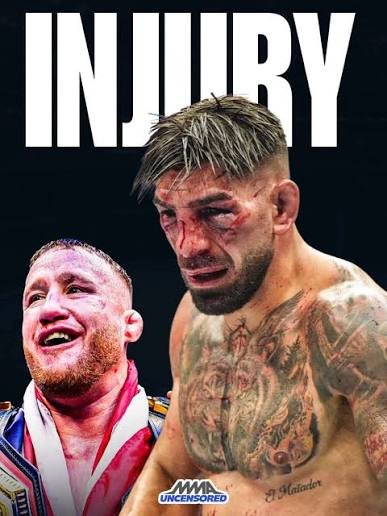
Ilia Topuria Injury: What Happened
The latest Ilia Topuria injury story began after his highly anticipated UFC Freedom 250 lightweight title fight against Justin Gaethje on June 14, 2026. What was expected to be another major chapter in Topuria’s championship career instead became the first professional MMA defeat of his career and a physically difficult night for the former two-division champion.
Gaethje stopped Ilia Topuria Injury by fourth-round TKO after a demanding fight in Washington, D.C., and Topuria required medical attention afterward. Reports following the event revealed that the damage was more significant than the swelling and cuts visible immediately after the bout. Medical reports indicated that Topuria suffered non-displaced fractures involving both orbital bones, with the right side reportedly receiving more serious damage.
How the Injury Occurred Against Justin Gaethje
Ilia Topuria Injury entered the fight with an unbeaten professional record and considerable momentum. Gaethje, however, used his experience, pressure, movement, and powerful striking to create a difficult contest. As the fight progressed, Topuria absorbed substantial punishment around the head and face.
The fourth round ultimately ended the contest, with Ilia Topuria Injury unable to continue into the fifth. Afterward, UFC president Dana White confirmed that Topuria had been taken to a hospital for evaluation, emphasizing that the immediate priority was his health rather than discussing his next opponent.
What Are Orbital Fractures?
An orbital fracture involves a break in one or more of the bones that form the eye socket. These injuries can be especially important for combat athletes because the area surrounding the eyes is vulnerable to direct impact. In Ilia Topuria Injury case, reports described the fractures as non-displaced, meaning the broken bones had not significantly shifted from their normal position.
That distinction is important because non-displaced fractures can sometimes be managed without surgery, although the exact treatment depends on medical examinations, symptoms, vision, swelling, and other factors. Reports about Topuria indicated that surgery was not considered necessary for the orbital fractures.
Topuria’s Right Eye and Vision Problems
One of the most concerning aspects of the Ilia Topuria injury was the effect of the damage around his eyes. Following the fight, Topuria described significant vision problems during the bout, saying that his right eye was affected early and that his left eye also became compromised as the fight progressed.
For a professional fighter, temporary vision impairment can dramatically affect defensive reactions, distance management, accuracy, and the ability to recognize incoming strikes. This helps explain why eye-related injuries are treated very seriously in combat sports. Although Ilia Topuria Injury later recovery appeared encouraging, eye and orbital injuries require careful medical monitoring before an athlete can safely return to full-contact competition.
The Facial Damage Was More Than the Eye Injury
The orbital fractures were the most significant reported injuries, but Topuria also suffered considerable visible facial damage during the fight. Reports described swelling, bruising, cuts, and a broken nose in addition to the fractures around his eyes. The combination created a dramatic appearance immediately after the bout and raised questions about how long the former champion would need to recover.
Fortunately, later reports suggested that the visible facial damage improved considerably during the weeks following the contest. By late July, images of Ilia Topuria Injury without sunglasses showed a much more recovered appearance, giving fans additional reason for optimism about his physical progress.
Was Surgery Required for Ilia Topuria?
One of the biggest questions surrounding the Ilia Topuria injury was whether he would require surgery. Available reports indicated that the orbital fractures were non-displaced and that doctors did not consider an operation necessary. Avoiding surgery can potentially simplify the recovery process, although it does not mean an athlete can immediately return to fighting.
Bone healing still takes time, and the surrounding tissues also need to recover. For an MMA fighter, the standard of recovery is particularly demanding because returning to competition means being exposed to repeated strikes, grappling pressure, and accidental contact around the injured area. Therefore, looking healthy externally is not necessarily the same thing as being medically ready to fight.
How Long Could Topuria’s Recovery Take?
Recovery estimates have varied depending on whether the discussion concerns bone healing, training, or an actual UFC fight. Ilia Topuria Injury coach Jesus Gallo reportedly said that doctors expected the orbital bones to heal properly within approximately six to eight weeks because the fractures were not displaced.
However, healing the bone is only one part of the process. A professional fighter must also rebuild training intensity, regain confidence in defensive exchanges, and receive appropriate medical clearance before returning to full-contact sparring. That means the date when Topuria feels better may be significantly earlier than the date when he is ready to compete under UFC rules.
Why a Six-Month Medical Suspension Matters
Ilia Topuria Injury was reportedly given a 180-day medical suspension following the fight. Such a suspension is designed to protect fighters after serious injuries and can be shortened if the athlete receives the necessary medical clearance. The suspension does not automatically mean that Topuria will be unavailable for exactly six months, but it demonstrates how seriously the athletic authorities viewed the damage.
Reports indicated that Topuria’s suspension was connected to the broken orbital bones suffered during the fight. The period also gives him an opportunity to recover without the pressure of rushing back simply because fans or promoters want to see him compete again.
Topuria’s Recovery Has Shown Encouraging Signs
Despite the seriousness of the initial injury, more recent updates have provided a much more positive picture. Images released weeks after the fight showed Topuria without the sunglasses he had frequently worn while recovering from the facial damage. His face appeared substantially improved, with little of the swelling and bruising visible immediately after the Gaethje fight.
Reports also indicated that he had been seen engaging in light recreational activity, although that should not be confused with a full return to professional MMA training. These developments suggest that the visible healing process has been progressing well, but only his medical team can determine whether the deeper orbital injuries have fully recovered.
Could Ilia Topuria Return Before the End of 2026?
The timing of Ilia Topuria Injury return remains uncertain. His coach has reportedly suggested that a December comeback could be possible if recovery continues smoothly, while other reports have described early 2027 as a more realistic possibility. The difference illustrates why return dates should be treated as estimates rather than guarantees. Even if the bones heal within the expected period.
Topuria would still need to resume conditioning, wrestling, striking, sparring, and eventually fight preparation. A UFC main-event camp requires a fighter to be able to withstand repeated contact, and returning too early after an orbital injury could create unnecessary risk.
Why Topuria Should Not Rush His Comeback
Ilia Topuria Injury has built his reputation on an aggressive style and exceptional confidence. That mindset has helped him become one of MMA’s most recognizable fighters, but injuries require a different approach. An orbital injury is not something an athlete should attempt to ignore simply because the face looks normal again.
A premature return could expose the healing area to another powerful strike before it has fully regained strength. For Topuria, waiting until doctors and trainers are satisfied with his recovery may be more important than returning a few weeks earlier. His long-term career should matter more than satisfying immediate expectations for another major fight.
The Injury Came During the Biggest Challenge of His Career
The significance of the injury is also connected to the circumstances surrounding the fight. Topuria had entered the contest as one of the UFC’s most dangerous knockout artists and had previously captured championships in two weight classes. His move to lightweight had produced another major achievement, and the Gaethje matchup was supposed to establish his position at the top of the division.
Instead, the fight became a test of endurance and durability that ended with Topuria suffering the first defeat of his professional career. The combination of his first loss and significant facial injuries made the event a particularly difficult moment in his career.
What the Injury Means for Topuria’s UFC Future
The injury could influence Ilia Topuria Injury UFC future in several ways. First, it creates a forced period away from competition during which the lightweight division will continue moving forward. Second, his first professional defeat changes the narrative around his next fight. Before the Gaethje bout, Topuria could reasonably be discussed as an undefeated champion moving from one elite opponent to another.
After the loss, he may need to rebuild his momentum before receiving another immediate championship opportunity. Finally, his recovery may determine whether the UFC books him against another elite contender or gives him a more manageable opponent for his return. The goal will likely be to combine competitive value with a sensible comeback after a serious injury.
Possible Opponents for Topuria After Recovery
Several names could become relevant when Topuria is medically cleared and ready to return. One recent suggestion came from lightweight contender Arman Tsarukyan, who proposed Michael Chandler as a possible comeback opponent. The idea behind such a matchup would be to give Ilia Topuria Injury a high-profile fight without immediately placing him back into the most demanding championship situation.
Other lightweight contenders could also enter the conversation depending on rankings, injuries, schedules, and title developments. However, matchmaking speculation should not be confused with an official UFC booking. As of the latest reports, Topuria’s exact next opponent and return date have not been confirmed.
Could Topuria Get a Rematch With Justin Gaethje?
A rematch with Justin Gaethje would naturally attract enormous attention because Gaethje handed Topuria his first professional defeat and took the lightweight championship in the process. Topuria may eventually want the opportunity to correct what happened, but an immediate rematch is far from guaranteed. Gaethje has reportedly shown interest in moving forward rather than automatically granting Topuria another title opportunity.
The UFC also has to consider the rest of the lightweight division, including other contenders who may establish themselves while Topuria is recovering. If Topuria returns with a convincing victory, however, the argument for another championship opportunity could become much stronger.
The Mental Side of Recovering From a First Loss
Physical recovery is only one part of what Topuria faces. The psychological impact of suffering the first loss of a professional career can be substantial, particularly for an athlete who had developed an undefeated identity. Topuria now has to process a defeat while simultaneously recovering from facial injuries. The experience could ultimately make him a more mature fighter.
Losses can expose technical weaknesses, reveal areas where preparation can improve, and encourage athletes to reconsider how they manage difficult moments inside the cage. Topuria’s response to this setback may become just as important as the injury itself when evaluating his next stage of development.
What Fans Should Watch During His Recovery
Fans following the Ilia Topuria injury should focus on meaningful medical and training updates rather than rumors about specific fight dates. The most important signs will include confirmation that his orbital bones have healed, clearance for contact training, a gradual return to wrestling and striking, and eventually a full UFC fight announcement.
Photos showing reduced swelling can be encouraging, but they cannot replace medical examinations. Similarly, seeing Topuria participate in light physical activity does not necessarily mean he is ready for hard sparring. The safest interpretation is that his visible recovery has been positive while his full competition readiness remains a separate question.
Why Eye Injuries Are Especially Important in MMA
MMA fighters depend heavily on vision for almost every part of their performance. Distance, timing, defensive reactions, takedown recognition, striking accuracy, and movement all rely on the ability to see clearly. An orbital injury can therefore have consequences beyond facial appearance. Even after a fighter feels comfortable in everyday life, returning to a professional cage requires confidence that the injured area can withstand contact.
This is particularly relevant for Topuria because his fighting style involves close-range exchanges where punches, elbows, kicks, and grappling pressure can all create risks. A careful recovery is therefore essential to protecting both his immediate health and his long-term career.
The Difference Between Looking Recovered and Being Fight Ready
Recent images have made it clear that Topuria’s facial appearance has improved considerably since the June fight. That is encouraging, but visual recovery should not be mistaken for complete recovery. Bones and internal tissues can continue healing after bruises disappear, and professional training places demands on the body that ordinary daily activities do not.
A fighter may look completely healthy while still needing additional time before safely returning to full-contact work. For this reason, the most reliable indicator of Topuria’s readiness will be formal medical clearance combined with a gradual return to high-level training rather than social-media photographs alone.
What the Injury Could Teach Topuria
Every major setback offers an opportunity for technical and strategic development. The Gaethje fight may encourage Topuria and his team to examine defensive positioning, shot selection, pacing, and how he responds when an opponent creates sustained pressure.
Because Topuria had been so successful before the defeat, there was limited evidence of how he would react when an elite opponent forced him into a prolonged and physically punishing battle. The experience could help him develop another layer of his game. If he returns healthier and more strategically prepared, the injury and defeat could eventually become an important part of his development rather than simply a negative chapter.
Current Ilia Topuria Injury Status
Based on the latest available reports, Topuria is recovering from the orbital and facial injuries suffered against Gaethje. The fractures were reported as non-displaced, and surgery was not required according to available accounts. His visible facial condition has improved significantly, and recent appearances have suggested that the swelling and bruising have largely disappeared.
Nevertheless, he remains subject to the normal medical and training process required before returning to UFC competition. His exact comeback date has not been officially confirmed, and reports have offered different possibilities ranging from late 2026 to early 2027.
Final Thoughts on Ilia Topuria Injury
The Ilia Topuria injury has become one of the most important storylines surrounding the former UFC champion after his dramatic loss to Justin Gaethje. The reported fractures to both orbital bones, along with facial damage and vision problems during the fight, made the bout considerably more serious than an ordinary defeat. At the same time, the latest recovery images provide reasons for optimism.
The biggest question now is not whether he can look healthy again, but when he will be medically and physically prepared to withstand the demands of elite MMA. Whether that happens in late 2026 or early 2027, rushing the process would make little sense. Topuria has already accomplished enough to justify taking the necessary time to recover properly. His next chapter should begin only when his health, training, and confidence are ready for the challenge.
You Many Also Read: My Watchlist
1 thought on “Ilia Topuria Injury and UFC Comeback: Latest Updates and Timeline”