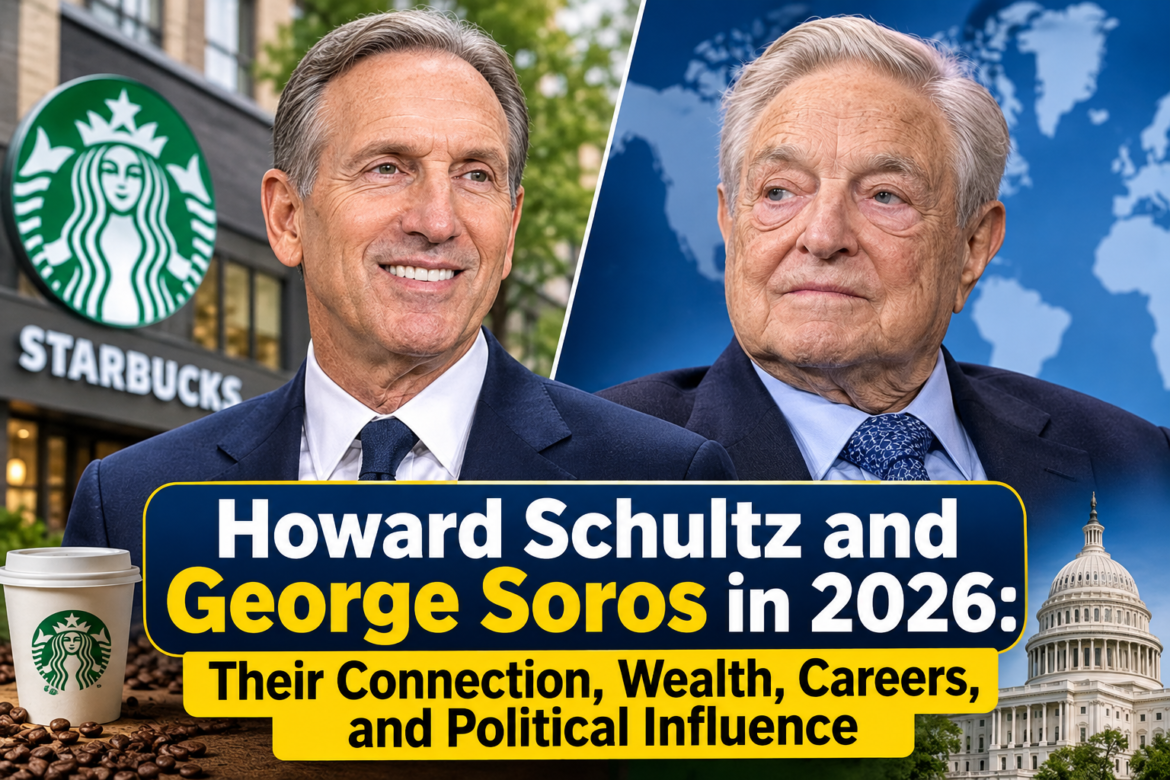
Introduction to Howard Schultz and George Soros
Howard Schultz and George Soros are two internationally recognized figures whose names are frequently associated with wealth, business leadership, philanthropy, and political influence. Although they built their fortunes in very different industries, both have become influential personalities whose decisions and public statements have attracted considerable attention.
Howard Schultz is best known for transforming Starbucks into one of the world’s most recognizable coffeehouse brands, while George Soros is widely known for his achievements in financial markets, investment management, and philanthropic activities. Their stories offer different perspectives on how individuals can use financial success, leadership, and public influence to shape society. Understanding Howard Schultz and George Soros together also provides an opportunity to explore the differences between corporate entrepreneurship and global investment philanthropy.
Who Is Howard Schultz?
Howard Schultz is an American businessman best known for his leadership at Starbucks. Born on July 19, 1953, in Brooklyn, New York, he grew up in a working-class family. His early experiences influenced his understanding of financial security, employment opportunities, and the importance of treating workers with respect.
Schultz attended Northern Michigan University, where he earned a degree in communications. Before becoming associated with Starbucks, he developed professional experience in sales and business management. His career eventually led him to a small coffee company in Seattle, where he recognized an opportunity to introduce a different kind of coffeehouse experience to American customers.
Howard Schultz’s Journey to Starbucks
Schultz joined Starbucks in 1982 after working for a company that sold coffee equipment. At that time, Starbucks primarily focused on selling coffee beans and equipment rather than operating the extensive network of coffee shops that customers recognize today. During a visit to Italy, Schultz became fascinated by traditional Italian coffee bars and their welcoming atmosphere.
He believed that a similar concept could succeed in the United States. After establishing his own coffeehouse business, he eventually acquired Starbucks in 1987 and began expanding the company. His leadership helped transform the brand into an international business with a strong identity built around coffee, customer service, and the coffeehouse experience.
Who Is George Soros?
George Soros is a Hungarian-American investor, philanthropist, and public intellectual known for his work in financial markets and international charitable activities. He was born on August 12, 1930, in Budapest, Hungary. His early life was shaped by the political instability and persecution experienced by Jewish families during World War II.
After surviving the Nazi occupation of Hungary, Soros moved to England in 1947. He studied at the London School of Economics, where he encountered philosophical ideas that later influenced his thinking about society, markets, and political institutions. After completing his education, he entered the financial industry and eventually became one of the world’s most prominent investors.
George Soros’s Rise in the Financial World
Soros developed his reputation through investment management and his understanding of international financial markets. He established Soros Fund Management and became widely associated with the Quantum Fund, which achieved significant success over several decades. His investment strategies combined financial analysis with an understanding of economic trends, market psychology, and political developments.
One of the most frequently discussed moments in his career occurred in 1992, when his fund made a major investment against the British pound before the currency’s withdrawal from the European Exchange Rate Mechanism. This event earned him international recognition and contributed to his reputation as a powerful global investor.
Why Are Howard Schultz and George Soros Mentioned Together?
The keyword Howard Schultz and George Soros attracts attention because both men are wealthy Americans whose activities extend beyond their primary professional careers. Schultz became influential through corporate leadership, while Soros developed considerable influence through financial investments and political philanthropy.
Their names have also appeared in discussions about American political organizations and campaign-related controversies. However, it is important to distinguish between a documented connection and an assumed personal relationship. Both individuals have participated in different areas of public life, but that does not automatically mean they have worked together or share the same objectives.
The Political Connection Between Howard Schultz and George Soros
One reason their names sometimes appear together involves American Bridge 21st Century, a political organization that received financial contributions from George Soros. According to FactCheck.org, Soros contributed $300,000 to the organization during the 2018 election cycle.
In February 2019, American Bridge 21st Century and Bradley Beychok filed a complaint with the Federal Election Commission concerning Howard Schultz’s possible presidential campaign. This created an indirect connection between the two individuals through a political organization.
Howard Schultz’s Potential Presidential Campaign
In January 2019, Schultz publicly discussed the possibility of running for president of the United States as an independent candidate. His announcement attracted considerable media attention because of his business background, financial resources, and criticism of the American political system. He suggested that an independent campaign could offer voters an alternative to the traditional political parties.
However, his potential candidacy also generated criticism from people who believed that an independent candidate could influence the outcome of an election. Schultz eventually announced in September 2019 that he would not pursue the presidential campaign. His political ambitions nevertheless remain an important part of discussions about his public identity.
What Was the American Bridge FEC Complaint?
The Federal Election Commission complaint involving Schultz was filed in February 2019. American Bridge 21st Century argued that Schultz’s activities while considering a presidential campaign could have required him to register and report as a candidate under federal election laws.
The complaint referred to activities such as hiring political consultants, conducting polling, and preparing for a possible campaign. These were allegations rather than established violations. The Federal Election Commission ultimately dismissed the allegation and closed the matter. The official record identifies American Bridge and Bradley Beychok as complainants, not George Soros personally.
Did George Soros Personally File a Complaint Against Howard Schultz?
There is an important distinction between financially supporting an organization and personally directing its activities. George Soros was a reported donor to American Bridge 21st Century, but the available Federal Election Commission record does not identify him as the person who filed the complaint against Schultz.
The organization had its own leadership, employees, political objectives, and decision-making processes. Therefore, describing Soros as the individual who personally filed or ordered the complaint would be misleading without additional evidence. Understanding this distinction helps readers avoid confusing financial contributions with direct political involvement.
Comparing Their Business Achievements
Howard Schultz and George Soros achieved financial success through very different approaches. Schultz developed a consumer-focused company that changed how millions of people experience coffee. His business strategy involved branding, customer loyalty, store expansion, and employee benefits. Soros, on the other hand, built his reputation through investment management, international financial markets, and economic analysis.
His achievements demonstrate how investment decisions can influence financial institutions and market discussions. While Schultz focused on building a recognizable global consumer brand, Soros concentrated on identifying financial opportunities and managing investment capital. Both demonstrate the importance of strategic thinking, although their professional environments were considerably different.
Howard Schultz’s Leadership Philosophy
Schultz has frequently emphasized the importance of company culture and employee relationships. His personal experiences growing up in a working-class family influenced his approach to business leadership. He believed that successful companies should consider the well-being of their employees alongside financial performance.
During his Starbucks leadership, the company introduced employee stock ownership opportunities, healthcare benefits, and educational support programs. These initiatives helped establish a reputation for employee-focused corporate policies, although Starbucks has also faced criticism and labor disputes during its history. Schultz’s leadership philosophy illustrates how personal experiences can influence business decisions and corporate culture.
George Soros’s Investment Philosophy
George Soros is associated with a distinctive approach to understanding financial markets. His investment philosophy includes the concept of reflexivity, which examines how people’s beliefs and expectations can influence market behavior. According to this idea, financial markets are not always driven by objective economic information because investors’ perceptions can also affect prices and decisions.
Soros became internationally recognized for his successful investment strategies, particularly during the 1992 British pound crisis. His career demonstrates the importance of studying economic conditions, political developments, market psychology, and financial risk. His investment philosophy has also influenced discussions about modern financial markets and international economics.
The Role of Philanthropy in Their Public Lives
Philanthropy represents another area in which Schultz and Soros have attracted public attention. Both have supported initiatives intended to address social challenges, although their priorities and organizational structures differ. Schultz and his wife, Sheri, established the Schultz Family Foundation, which focuses on creating opportunities for young people and supporting pathways into adulthood.
The foundation reflects Schultz’s interest in economic opportunity, employment, and community development. Soros established the philanthropic network that became the Open Society Foundations, supporting organizations and individuals working on human rights, education, justice, and democratic participation.
The Schultz Family Foundation and Its Mission
The Schultz Family Foundation reflects the belief that people should have opportunities to improve their circumstances regardless of their economic background. Its work focuses particularly on young people who face barriers when transitioning into adulthood. The organization supports programs connected to education, employment, leadership development, and economic opportunity.
Schultz’s own childhood experiences help explain his interest in these issues. Growing up in public housing gave him a personal understanding of financial insecurity and limited opportunities. Through the foundation, he and his wife have sought to support initiatives that help individuals develop skills, find meaningful employment, and build more stable futures.
The Open Society Foundations and George Soros
George Soros’s philanthropic activities are closely connected to the Open Society Foundations. He began his international philanthropic work in 1979, initially supporting educational opportunities for Black students in apartheid-era South Africa and providing assistance to Eastern European dissidents.
Over time, his philanthropic activities expanded across multiple regions and covered subjects such as freedom of expression, human rights, education, and accountable government. The organization has distributed substantial financial resources to independent groups working on social and political challenges. According to its November 2025 fact sheet, Soros had contributed more than $32 billion to the foundations since 1984.
Their Different Views on American Politics
Howard Schultz and George Soros have attracted attention for their involvement in American political discussions, but their approaches are not identical. Schultz has presented himself as a business-oriented independent thinker and has criticized aspects of the traditional political system. His consideration of an independent presidential campaign reflected his interest in offering an alternative to established political parties.
Soros has supported political and civic organizations connected to causes that reflect his philanthropic priorities. His public involvement has generally been associated with democratic institutions, civil liberties, and progressive political causes. Their different backgrounds and approaches demonstrate how wealthy individuals can participate in public discussions through different channels.
Why George Soros Attracts Public Attention
George Soros is one of the most discussed philanthropists and investors in modern public life. His financial achievements and large charitable contributions have made him a prominent international figure. Supporters appreciate his financial commitment to education, civil rights, and democratic institutions.
Critics, however, disagree with some of his political positions and the influence that wealthy donors can exercise through philanthropy and political contributions. These disagreements have made his name particularly prominent in political conversations. A balanced understanding requires examining documented financial activities, organizational records, and public statements instead of relying on rumors or unsupported claims.
Why Howard Schultz Remains an Influential Business Figure
Howard Schultz continues to be recognized for his contribution to modern retail and coffee culture. Starbucks became a global brand under his leadership, helping popularize specialty coffee and creating a recognizable customer experience across international markets. Although he stepped away from the company’s board in September 2023, Starbucks recognized him as its chairman emeritus.
He has also continued participating in business discussions and entrepreneurial activities. In April 2026, Gopuff announced that Schultz had joined its board of directors, demonstrating his continued interest in business leadership and consumer-focused innovation.
Similarities Between Howard Schultz and George Soros
Despite their different professional backgrounds, Howard Schultz and George Soros share several broad characteristics. Both built substantial wealth through their professional achievements and later became influential public personalities. Both have supported philanthropic activities and participated in conversations about economic and social issues.
Their careers also demonstrate the importance of long-term thinking, strategic decisions, and understanding the relationship between financial resources and public influence. However, their similarities should not be exaggerated. Schultz’s influence is primarily associated with corporate entrepreneurship and consumer business, while Soros’s influence is connected to financial investment and international philanthropy.
Important Differences Between the Two Personalities
The most significant difference between Howard Schultz and George Soros is the way they developed their professional influence. Schultz became successful by building and expanding a recognizable consumer company. His work involved managing employees, developing products, understanding customer preferences, and creating a consistent brand experience. Soros became successful by analyzing financial markets, managing investments, and identifying opportunities within changing economic conditions.
Their philanthropic interests also differ in emphasis. Schultz’s foundation concentrates on opportunity and youth development, while Soros’s philanthropic network supports a wider range of international issues, including democratic participation and human rights. These differences make their stories interesting examples of two distinct paths to public influence.
Public Perception and Media Coverage
Media coverage has played an important role in shaping how people understand both individuals. Schultz frequently appears in discussions about Starbucks, corporate responsibility, employee relations, and American business leadership. Soros is regularly discussed in reporting about financial markets, philanthropy, political donations, and international affairs.
When their names appear together, readers may assume that they have a direct relationship. However, responsible reporting requires examining the actual evidence behind such connections. The documented American Bridge and FEC episode explains why their names have appeared in some political discussions, but it does not establish that they are business partners or close personal associates.
What Can Entrepreneurs Learn From Their Stories?
Entrepreneurs can learn several valuable lessons from the professional journeys of Schultz and Soros. Schultz’s career demonstrates the importance of recognizing opportunities, understanding customers, developing a strong brand, and building a company culture.
His Starbucks experience shows that a relatively simple product can become the foundation of a major international business when supported by effective management and a recognizable customer experience. Soros’s career demonstrates the value of understanding market conditions, studying economic developments, and evaluating risk before making financial decisions. Together, their stories show that financial success can emerge from different industries and professional strategies.
What Can Their Philanthropic Work Teach Society?
Their charitable activities demonstrate that financial resources can support initiatives beyond traditional business objectives. Schultz’s foundation focuses on helping people overcome economic and educational barriers, particularly during important stages of their lives. Soros’s philanthropic organizations support independent institutions and groups working on social, political, and educational challenges.
These approaches show that philanthropy can take different forms depending on an individual’s experiences and priorities. They also raise important questions about accountability, transparency, and the responsibility of wealthy individuals when supporting public causes. Examining these issues helps create a more complete understanding of their influence.
The Importance of Separating Facts From Political Speculation
Discussions involving wealthy businesspeople and political donors can easily become complicated by speculation. Howard Schultz and George Soros are examples of public figures whose names sometimes appear together in online discussions that suggest a stronger connection than available evidence establishes. Readers should examine reliable records before accepting claims about secret partnerships, coordinated campaigns, or personal relationships.
The documented political connection through American Bridge is different from proof that Soros personally targeted Schultz. Similarly, a shared interest in philanthropy or public affairs does not establish that two individuals have the same political beliefs or professional objectives. Accurate information is especially important when discussing influential people.
Howard Schultz and George Soros in 2026
In 2026, both individuals remain recognizable names in discussions about business, wealth, philanthropy, and public influence. Schultz continues to be associated with Starbucks and his wider entrepreneurial interests, including his board appointment at Gopuff. Soros remains recognized for his financial achievements and the international philanthropic network he established.
Their long-term legacies are connected to different areas of society, but both demonstrate how financial success can create opportunities to influence institutions and support social initiatives. Their careers also show that public influence brings scrutiny, disagreement, and responsibility.
Conclusion: Understanding Howard Schultz and George Soros
Howard Schultz and George Soros represent two different approaches to financial success and public influence. Schultz transformed Starbucks into a globally recognized coffeehouse company through entrepreneurship, customer-focused strategies, and corporate leadership. Soros built his wealth through financial investments and became a major international philanthropist through the Open Society Foundations.
Their names have appeared together in discussions about American politics because George Soros supported American Bridge 21st Century, an organization that later filed an FEC complaint concerning Schultz’s potential presidential candidacy. However, the available records do not establish that Soros personally filed or directed that complaint, or that the two men have a verified business partnership. Understanding their individual achievements and the limited documented political connection provides a more accurate picture of Howard Schultz and George Soros.



1 thought on “Howard Schultz and George Soros in 2026: Business Success, Philanthropy, and Public Lives”