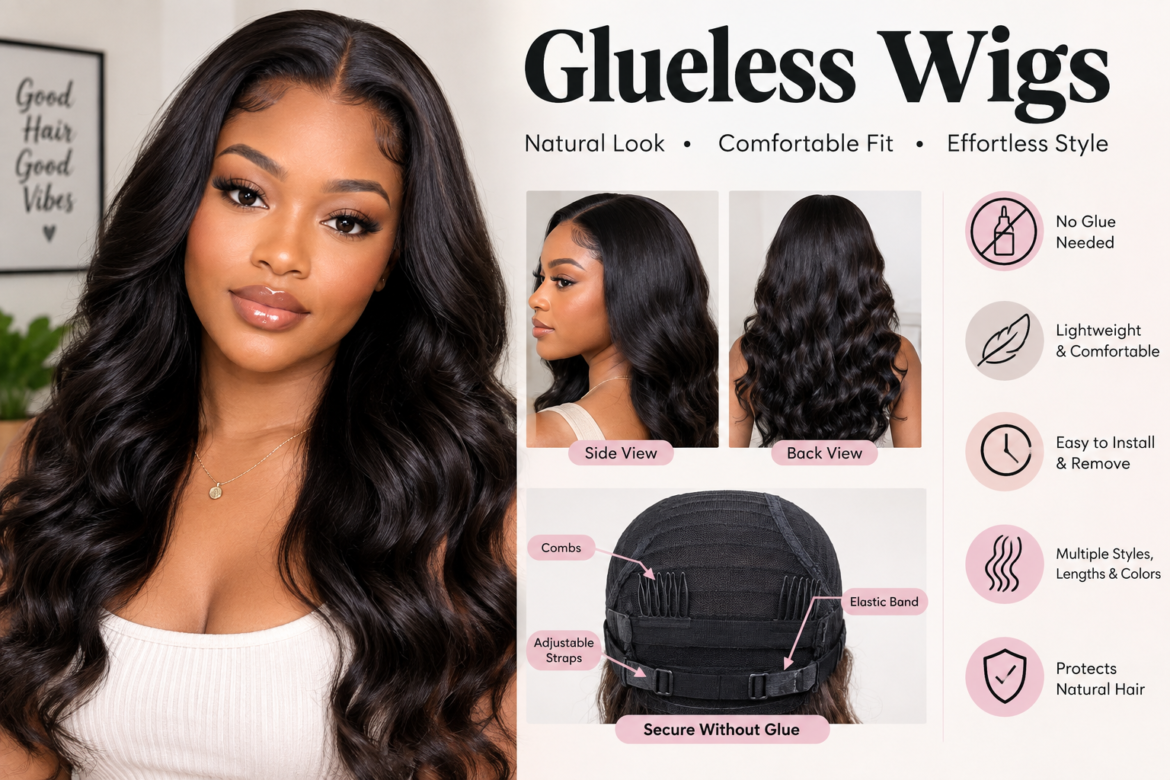
Glueless wigs have become an increasingly popular choice for people who want to enjoy beautiful, versatile hairstyles without dealing with the inconvenience of traditional wig adhesives. Whether someone is experiencing hair thinning, looking for a protective styling option, or simply interested in changing their appearance, glueless wigs offer a convenient way to achieve a fresh look with minimal effort.
Unlike conventional wigs that often require glue, tape, or other bonding products to remain in place, glueless wigs are designed with adjustable straps, combs, elastic bands, or specialized cap constructions that help secure them comfortably on the head. This makes them particularly appealing to beginners, busy professionals, fashion enthusiasts, and anyone who values flexibility in their daily beauty routine.
What Are Glueless Wigs?
Glueless wigs are hairpieces designed to stay securely on the head without requiring adhesive glue or wig tape along the hairline. They typically feature built-in components that provide support and stability, making them easier to install and remove than many traditional lace wigs. Depending on the construction, a glueless wig may include adjustable elastic straps, combs, clips, an elastic band, or a specially designed cap that fits closely around the head.
Some modern options also feature pre-cut lace, pre-plucked hairlines, and adjustable drawstrings to simplify the installation process. The main purpose of a glueless wig is to provide a convenient styling solution that does not depend on bonding products. This allows wearers to put on their wig when needed and remove it at the end of the day without spending time dissolving adhesive or cleaning glue residue from the hairline. Glueless wigs are available in both synthetic and human hair varieties, offering choices for different budgets, styling preferences, and maintenance routines.
Why Glueless Wigs Are Becoming So Popular
The growing popularity of glueless wigs is closely connected to changing beauty preferences and the demand for convenient hair solutions. Many people want hairstyles that look polished without requiring a lengthy salon appointment or complicated installation process. Glueless wigs make it possible to change a hairstyle quickly, whether preparing for work, attending a special event, or creating a different appearance for a casual outing.
Their removable design is another important attraction because wearers can take them off whenever they want, making daily hair routines more flexible. People who prefer to avoid adhesive products may also appreciate having an option that does not require glue near the hairline. Additionally, the availability of beginner-friendly designs has made wig styling more accessible to individuals who have never worn a wig before. Social media tutorials, beauty demonstrations, and changing fashion trends have helped introduce more people to glueless wig styles and installation techniques.
Different Types of Glueless Wigs Available Today
Glueless wigs come in several different constructions, and each type offers specific benefits depending on the wearer’s needs. Glueless lace front wigs are designed with lace material around the front hairline, creating the appearance of hair growing naturally from the scalp. They often feature adjustable bands and combs that help keep the wig in position without adhesive. Glueless closure wigs use a smaller lace section, commonly positioned at the top or front, which can provide a natural-looking part while requiring less lace customization.
Full lace wigs offer more styling flexibility because lace extends across most or all of the cap, although they may require careful adjustment to achieve a secure fit without glue. Another popular option is the wear-and-go wig, which is usually designed with pre-cut lace, a prepared hairline, and convenient adjustment features. These wigs are especially appealing to people who want a quick installation process. Headband wigs are another beginner-friendly choice because they use a fabric headband to secure the wig and conceal the front edge.
Human Hair Glueless Wigs Versus Synthetic Glueless Wigs
One of the most important decisions when shopping for glueless wigs is choosing between human hair and synthetic hair. Human hair glueless wigs are made using real human hair and are often valued for their natural movement, realistic texture, and styling versatility. Depending on the hair quality and construction, many human hair wigs can be washed, conditioned, curled, or straightened using appropriate techniques.
Some can also be colored by experienced professionals, although chemical processing may shorten their lifespan or affect the hair’s condition. Human hair wigs generally require a larger initial investment and regular maintenance to preserve their appearance. Synthetic glueless wigs are typically made from manufactured fibers designed to imitate natural hair. They are often more affordable and may come pre-styled, allowing wearers to enjoy a particular look without spending much time on daily styling.
How Glueless Wigs Protect Natural Hair
Glueless wigs are often chosen as part of a protective styling routine because they allow people to cover their natural hair without relying on adhesive products. When properly fitted and worn with appropriate care, they can help reduce the need for frequent heat styling, chemical treatments, and daily manipulation of natural hair. This can be especially useful for individuals who want to maintain a particular hairstyle while giving their own hair a break from repeated styling.
However, it is important to understand that a wig does not automatically guarantee healthy hair. Tight caps, excessive comb pressure, friction, and constant tension around the hairline may contribute to discomfort or hair breakage. A protective approach should include preparing the natural hair gently, avoiding overly tight braids, and selecting a wig cap that does not create unnecessary pressure. Wearing a breathable wig cap and keeping the scalp clean can also support a comfortable routine.
Benefits of Wearing Glueless Wigs
Glueless wigs offer several practical benefits that make them an appealing option for everyday hairstyling. One of their biggest advantages is convenience, as many designs can be installed in just a few minutes without professional assistance. This is particularly helpful for people who have busy schedules or prefer to manage their own beauty routines at home.
Another benefit is easy removal. Since the wig does not depend on adhesive, wearers can take it off without using specialized glue removers or spending extra time cleaning the hairline. Glueless wigs can also provide greater flexibility for people who enjoy changing their hairstyles frequently. Someone can wear a long, straight wig during the day and switch to a curly or short style for another occasion. Many designs also feature adjustable straps that allow the wearer to customize the fit.
How to Choose the Right Glueless Wig for Your Needs
Choosing the right glueless wig involves considering several factors, including cap size, hair material, length, texture, density, and intended use. The first step is measuring the head accurately because a poorly fitted wig may slide, feel uncomfortable, or create unwanted tension. Most wig manufacturers provide sizing charts that help shoppers compare their measurements with available cap sizes. Hair material is another important consideration.
Human hair may be suitable for someone who wants realistic movement and styling flexibility, while synthetic hair can be a convenient option for shoppers seeking a ready-to-wear style at a lower cost. Length and density also influence the overall appearance. A shorter wig may be easier to maintain, while a longer style can provide more dramatic styling opportunities but may require additional detangling. People seeking a natural everyday look may prefer moderate density and a hair texture that closely resembles their own.
Understanding Wig Cap Construction and Fit
The cap construction of a glueless wig plays a major role in determining how securely and comfortably it sits on the head. A well-designed cap should fit closely without causing headaches, pressure, or excessive tightness. Adjustable straps are commonly used to modify the fit, while elastic bands can provide additional support around the back of the head. Some designs include combs that attach to the natural hair, although these should be used carefully because excessive tension may contribute to breakage.
Wig caps may also feature breathable mesh sections that allow some airflow and help improve comfort during wear. Lace-front constructions are often selected by people who want a realistic-looking hairline, while headband wigs provide a simpler design that does not require lace blending. The right construction depends on individual preferences, head shape, hair condition, and how the wig will be worn. Before purchasing, shoppers should review the available cap measurements and determine whether the design offers enough adjustment for their needs.
How to Install Glueless Wigs at Home
Installing a glueless wig at home can be a straightforward process when the right preparation steps are followed. Begin by gently detangling the natural hair and arranging it in a flat, comfortable style beneath the wig. Depending on hair length and texture, this may involve loose braids, flat twists, or another low-tension method. A wig cap can help create a smooth base, although it should not be so tight that it causes discomfort.
Next, inspect the inside of the wig and locate its adjustable straps, combs, or elastic band. Position the wig carefully on the head, aligning the front edge with the desired hairline. Adjust the straps gradually until the wig feels secure without excessive pressure. If the wig has lace at the front, gently arrange it so that it lies naturally against the hairline. Some wearers choose to trim excess lace when necessary, but careful trimming is important to avoid damaging the wig. Pre-cut lace designs can reduce this step for beginners.
Tips for Making Glueless Wigs Look More Natural
A natural-looking wig depends on more than the hair itself. The correct color, texture, hairline, and cap fit all contribute to the final appearance. Choosing a wig that complements the wearer’s skin tone and natural hair color can create a balanced look, although some people intentionally select contrasting colors for fashion purposes. Lace-front wigs may provide a realistic hairline when the lace is properly positioned and the hairline is designed to suit the wearer.
A natural-looking part can also improve the appearance of a wig, especially when the parting area resembles the way hair naturally grows. Avoiding excessive density around the hairline may help create a softer, more realistic finish. Styling the wig to complement the face shape can further improve the overall result. For example, soft layers may add movement, while a middle part can create a different visual effect from a side part.
Glueless Wigs for Beginners
For beginners, glueless wigs can provide an accessible introduction to wearing wigs because they reduce the number of installation steps involved. People who have never applied lace adhesive may find adjustable-cap designs easier to manage. Headband wigs, wear-and-go wigs, and pre-cut lace styles are often considered convenient starting points because they require less customization. Beginners should prioritize comfort and simplicity rather than immediately choosing a complicated style that requires extensive preparation.
A lightweight wig with a secure cap and manageable length may be easier to wear during the learning process. It is also helpful to practice putting the wig on and taking it off at home before wearing it to an important event. This allows the wearer to become familiar with the adjustment features and learn how to position the wig correctly. Reading the manufacturer’s instructions can prevent common mistakes, such as tightening the straps too much or using heat on fibers that are not heat-resistant.
How to Care for and Maintain Glueless Wigs
Proper maintenance can help glueless wigs retain their appearance, texture, and usability for longer. The care routine depends on whether the wig is made from human hair or synthetic fibers, so following the manufacturer’s recommendations is essential. Human hair wigs generally benefit from gentle washing with suitable shampoo and conditioner. Before washing, carefully detangle the hair, beginning at the ends and gradually working upward.
Avoid rough rubbing or twisting because these actions may cause tangling or damage. After washing, gently remove excess water and allow the wig to dry according to its construction and care instructions. Synthetic wigs often require products specifically designed for synthetic fibers, and excessive heat should be avoided unless the manufacturer confirms that the hair is heat-resistant. Storage is equally important. Keeping a wig on a suitable wig stand or mannequin head can help maintain its shape and reduce tangling.
Common Mistakes to Avoid When Wearing Glueless Wigs
Although glueless wigs are designed to simplify hairstyling, certain mistakes can affect comfort, security, and appearance. One common mistake is choosing the wrong cap size. A wig that is too large may shift during movement, while a cap that is too small can create uncomfortable pressure. Another mistake is tightening adjustable straps excessively in an attempt to make the wig more secure. This can cause headaches and may place unnecessary tension on the natural hair.
Using combs aggressively or attaching them to fragile areas can also contribute to breakage. Some wearers assume that glueless wigs are suitable for every activity, but security varies by design, fit, and movement level. Activities involving vigorous movement, strong winds, or water may require additional precautions or a different wig construction. Another common issue is neglecting maintenance. Tangled hair, product buildup, and a dirty cap can affect the appearance and comfort of a wig.
Are Glueless Wigs Suitable for Everyday Wear?
Glueless wigs can be suitable for everyday wear, particularly for people who prefer a removable hairstyle that does not require adhesive. Their convenience makes them useful for work, school, social activities, and ordinary daily routines. However, the suitability of a particular wig depends on its weight, cap construction, fit, and the wearer’s comfort. Lightweight designs may be more comfortable for extended periods, while very long or dense wigs can feel heavier and require additional care.
People who wear wigs regularly should pay attention to scalp hygiene and the condition of their natural hair. Removing the wig when appropriate allows the scalp to be checked and cleaned, while also providing an opportunity to inspect the cap for sweat, dirt, or product buildup. It is important not to ignore itching, soreness, or persistent pressure. These symptoms may indicate that the wig is too tight or that the wearer is reacting to a material used in its construction.
Glueless Wigs and Fashion Versatility
One reason glueless wigs remain popular is their ability to support different fashion styles without requiring permanent changes to natural hair. Wearers can experiment with colors, lengths, and textures while keeping their own hair in its preferred condition. A straight black wig can create a sleek, polished appearance, while loose waves may provide a softer and more relaxed look. Curly wigs can add volume and definition, and short bob styles can offer a fresh alternative to longer hairstyles.
Some people use glueless wigs to complement seasonal clothing trends, while others choose them for special occasions such as weddings, parties, celebrations, and professional events. Color options range from natural shades such as black, brown, and blonde to vibrant fashion colors. The versatility of glueless wigs also makes it easier to match hairstyles with different outfits or personal aesthetics. However, styling possibilities depend on the material and construction.
How Much Do Glueless Wigs Cost?
The price of glueless wigs varies according to hair material, length, density, cap construction, and manufacturing quality. Synthetic glueless wigs are generally available at lower prices, making them accessible to people who want to experiment with different hairstyles without making a large investment. Human hair glueless wigs usually cost more because they use real hair and may offer greater styling flexibility.
Longer wigs, higher-density designs, and specialized lace constructions may also have higher prices. Additional features such as pre-plucked hairlines, pre-cut lace, adjustable bands, and customized coloring can influence the overall cost. When comparing products, shoppers should consider more than the initial purchase price. A less expensive wig may require more frequent replacement, while a higher-quality option may provide a longer period of use with proper care.
Where to Buy Glueless Wigs
Glueless wigs are available through online beauty retailers, wig specialty stores, hair salons, and selected beauty supply shops. Online shopping offers a wide selection of styles, colors, and cap constructions, allowing buyers to compare different options from home. However, shoppers should carefully review product descriptions, measurements, photographs, and customer feedback before making a purchase.
Clear information about hair material, cap size, lace type, and adjustment features is especially important. Buying from a retailer with transparent return and exchange policies can also be helpful if the wig does not fit as expected. Physical wig stores may allow shoppers to examine the texture, density, and cap construction before buying. Some salons also offer fitting assistance or customization services for people who want a more personalized result.
Conclusion: Are Glueless Wigs Worth Considering?
Glueless wigs provide a convenient and versatile option for people who want to enjoy different hairstyles without relying on traditional wig adhesives. Their adjustable designs, easy removal, and wide range of styles make them suitable for beginners and experienced wig wearers alike. Whether someone prefers human hair, synthetic fibers, lace-front designs, headband wigs, or ready-to-wear styles, there are options available for different budgets and preferences.
Choosing the right wig requires attention to cap size, comfort, material, hair texture, and intended use. Proper installation and maintenance are equally important because a well-fitted wig is more likely to feel comfortable and look natural. Although glueless wigs can be part of a protective styling routine, they still require responsible wear and regular attention to the natural hair and scalp. By understanding their features, benefits, and limitations, shoppers can make informed decisions and select a wig that complements their lifestyle.
You Many Also Read: Deacon Phillippe
1 thought on “Glueless Wigs: A Complete Guide to Comfortable, Natural-Looking, and Effortless Hair Styling”