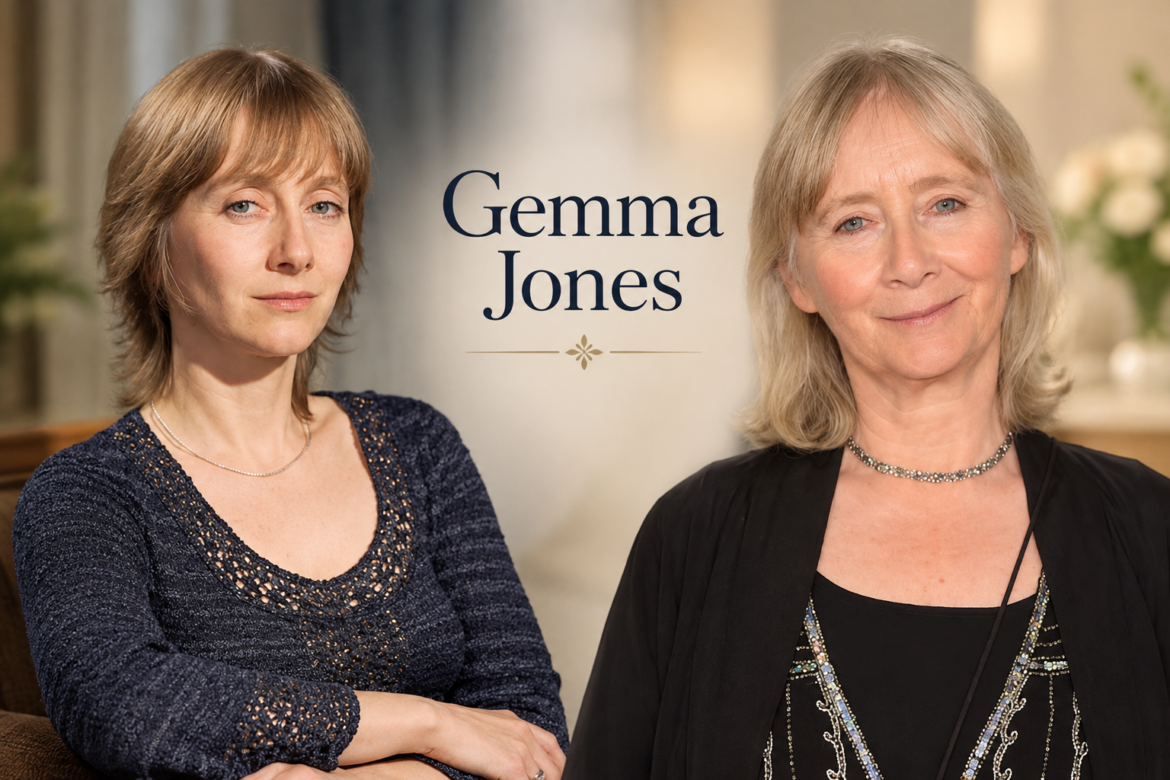
Introduction to Gemma Jones
Gemma Jones is a respected English actress whose remarkable career has made her a familiar face in British television, film, and theatre. Known for her graceful screen presence, expressive performances, and ability to bring complex characters to life, she has earned admiration from audiences across several generations.
Throughout her career, she has appeared in historical dramas, literary adaptations, romantic comedies, and popular television productions, demonstrating an impressive range of acting skills. Her work reflects a long-standing commitment to storytelling and a deep understanding of the characters she portrays. Although some viewers recognize her from major international films, others remember her from classic British television dramas and stage productions.
Her ability to move comfortably between different genres has helped her establish a lasting place in the entertainment industry. Gemma Jones is also an example of an actress whose achievements have developed through years of consistent work rather than a dependence on celebrity attention. Her story includes a distinguished theatrical background, memorable screen appearances, professional recognition, and a continuing influence on British acting.
Who Is Gemma Jones?
Gemma Jones is an English actress born on December 4, 1942, in Marylebone, London, England. She grew up in a family connected to the performing arts, an environment that helped introduce her to the world of theatre and acting. Over the decades, she developed a reputation for portraying intelligent, emotionally complex, and often warm characters.
Her performances frequently bring depth to supporting roles, allowing her characters to feel important to the overall story even when they are not the central figures. This quality has made her a valued performer in both British productions and internationally recognized films. Rather than being associated with only one type of character, she has played mothers, aristocratic women, professionals, historical figures, and characters whose personalities reveal themselves gradually.
Her career demonstrates that a successful actor does not always need to occupy the spotlight to leave a lasting impression. Jones has built her reputation through careful character work, professional discipline, and an ability to adapt to changing styles of filmmaking and television production.
Gemma Jones’s Early Life and Family Background
Gemma Jones was born into a family with a connection to British entertainment. Her father, Griffith Jones, was a Welsh actor, and her upbringing exposed her to the atmosphere of performance and storytelling from an early age. Having a parent who understood the demands of acting may have provided her with a useful perspective on the profession, although building her own career still required talent, preparation, and determination.
Her family background offered an introduction to the creative world, but Jones ultimately established her identity through her individual performances and professional choices. Growing up in England during the 1940s and 1950s, she lived through a period when British theatre, cinema, and television were undergoing significant changes. Television was becoming an increasingly important part of everyday life, while traditional stage acting remained a respected artistic profession.
These cultural developments created opportunities for performers who could work across different mediums. Jones eventually became one of the actresses capable of moving between stage productions and screen roles with confidence. Her early environment is an important part of her story because it helps explain her familiarity with performance as a serious craft rather than simply a route to fame.
Education and Training in Acting
Formal training has played an important role in the development of many respected British performers, and Gemma Jones belongs to a theatrical tradition that values technique, discipline, and an understanding of dramatic literature. She trained at the Royal Academy of Dramatic Art, widely known as RADA, in London. The institution has a long history of educating actors for careers in theatre, film, and television. Training at a respected drama school can help performers develop vocal control, movement, interpretation, and the ability to understand a script beyond its surface meaning.
These skills are particularly valuable when working with classical plays, period dramas, and literary adaptations, all of which have formed part of Jones’s career. Acting education also teaches performers how to collaborate with directors, fellow actors, and production teams. For an actress who would eventually work across several decades of changing entertainment styles, such foundations offered a valuable professional starting point. Jones’s later performances show a comfort with dialogue, character development, and emotional restraint that fits well within the British theatrical tradition.
Gemma Jones’s Early Acting Career
Gemma Jones began building her professional reputation through work in theatre and television before becoming widely recognized by international film audiences. In the early stages of an acting career, performers often take on a variety of roles that allow them to learn about different production environments and acting styles.
Jones developed experience in the British dramatic tradition, where dialogue, character relationships, and subtle emotional changes are often central to a performance. Her stage work helped strengthen her ability to interpret complicated material, while television provided opportunities to reach audiences beyond the theatre. Early roles are important because they allow actors to discover the strengths that later become associated with their professional identities.
For Jones, those strengths included natural delivery, expressive reactions, and a convincing portrayal of people whose lives contain both visible confidence and private uncertainty. Her career did not depend on a single breakthrough performance. Instead, it developed through a steady accumulation of experience, allowing her to become a dependable presence in a wide range of productions. This gradual development would later make her suitable for both intimate character dramas and large-scale cinematic stories.
Breakthrough and Recognition in British Television
British television has long provided opportunities for actors to develop detailed characters over multiple episodes or across different productions. Gemma Jones became an established presence in this environment, appearing in a variety of dramatic programs and literary adaptations. Television acting requires a particular balance: performers must communicate a character’s emotions clearly while remaining believable within the world of the story.
Jones’s style is well suited to this balance because she can convey considerable meaning through facial expressions, pauses, and understated dialogue. Her experience in period drama has also helped her portray characters shaped by different social expectations and historical circumstances. British television audiences have encountered her in productions that draw on literature, family relationships, social change, and historical events.
These roles have contributed to her reputation as an actress who brings credibility to the material she performs. Her work across different decades also reflects the evolution of British television, from traditional studio-based productions to more ambitious dramas made for national and international audiences. Through this experience, Jones established herself as a performer whose presence could strengthen a production without distracting from its central story.
Gemma Jones in the World of Theatre
Theatre remains an important part of the British acting tradition, and Gemma Jones’s professional background reflects the value of stage experience. Unlike film and television, theatre requires performers to sustain a character in real time before an audience. Actors must maintain concentration, manage their voices, respond to fellow performers, and communicate emotions without the benefit of repeated takes or close-up editing.
Stage performance also demands an understanding of dramatic structure, because an actor must know how a character develops from the opening scene to the conclusion. Jones’s training and theatrical experience have contributed to the qualities that audiences recognize in her screen performances. Her ability to make dialogue feel natural while maintaining a character’s broader emotional history is particularly valuable in productions based on classic plays and literary works.
Theatre can also provide performers with the opportunity to explore demanding roles in greater depth than a brief film appearance might allow. Although many modern audiences primarily associate Jones with television and cinema, her theatrical background forms an important foundation for understanding her craft. It demonstrates her connection to a tradition in which acting is viewed as both a profession and a continuing artistic discipline.
Gemma Jones’s Film Career and Major Roles
Gemma Jones has appeared in a broad selection of films, including historical dramas, literary adaptations, and popular romantic comedies. One of the qualities that distinguishes her film career is her ability to support the central narrative while giving her own character a recognizable personality. In ensemble productions, this skill is particularly valuable because several characters must share the screen without competing for attention.
Jones can communicate authority, affection, concern, and quiet humor, often within relatively short scenes. Her film appearances have introduced her to audiences who may not regularly watch British television or attend theatre performances. Through these projects, she has demonstrated that experienced character actors can make a significant contribution to a film’s emotional atmosphere.
Her work also reflects the international reach of British acting, with performers trained in theatre often becoming familiar faces in productions distributed around the world. Jones has moved between serious and lighthearted material, showing that her abilities are not limited to one genre. Her career offers a useful example of how versatility and reliability can sustain an acting profession over many years, even as audience tastes and film production methods change.
Sense and Sensibility and Literary Adaptations
One of Gemma Jones’s notable film appearances came in the 1995 adaptation of Jane Austen’s Sense and Sensibility, directed by Ang Lee. The film brought Austen’s exploration of family, romance, financial insecurity, and social expectations to a broad international audience. Jones played Mrs. Dashwood, the mother of the story’s central sisters, Elinor and Marianne Dashwood.
The role required her to portray a woman facing major changes in her family’s circumstances while trying to protect the emotional well-being of her daughters. Mrs. Dashwood must navigate grief, practical concerns, and the marriage expectations of her time, making her an important figure in the story’s emotional structure. Jones’s performance fits the film’s careful balance between restrained humor and sincere feeling.
Literary adaptations often require actors to communicate historical attitudes without making their characters feel distant or artificial. Jones’s portrayal helps make Mrs. Dashwood understandable to contemporary audiences while preserving the character’s connection to Austen’s world. The film remains an important example of the actress’s ability to work within an ensemble cast and contribute to a carefully constructed period drama.
Bridget Jones’s Diary and Popular Culture
Another widely recognized part of Gemma Jones’s career is her appearance in the Bridget Jones film series. In Bridget Jones’s Diary (2001), she played Mrs. Pamela Jones, the mother of Renée Zellweger’s title character. The film follows Bridget as she navigates romantic relationships, work, self-confidence, and the often-comical expectations of adult life. Jones’s character contributes to the story’s family dimension, offering a view of the social pressures that surround Bridget beyond her workplace and romantic relationships.
Mrs. Jones is memorable because she represents a particular generation’s ideas about marriage, respectability, and personal success, sometimes creating humorous tension with her daughter’s more independent approach to life. Jones returned to the role in later films in the series, including Bridget Jones: The Edge of Reason and Bridget Jones’s Baby. These appearances helped introduce her to a new generation of moviegoers.
Harry Potter and the Chamber of Secrets
Gemma Jones also appeared in the internationally successful Harry Potter film franchise. In Harry Potter and the Chamber of Secrets (2002), she portrayed Madam Poppy Pomfrey, the matron responsible for caring for injured students at Hogwarts School of Witchcraft and Wizardry. Although the role is not one of the franchise’s central characters, Madam Pomfrey is an important part of the school’s everyday life.
She represents the practical side of a magical institution in which young students regularly encounter dangerous situations. Jones brings a firm but caring quality to the character, making her believable as someone who takes responsibility for the students’ well-being. The role also illustrates the actress’s ability to work within fantasy filmmaking, a genre that requires performers to accept unusual settings and fictional rules while maintaining emotional credibility.
The Harry Potter films reached audiences across many countries, giving Jones additional international visibility. Her appearance in the franchise is a reminder that experienced actors can contribute meaningfully to productions built around younger leads and elaborate fictional worlds. Even a relatively brief performance can help make an imagined setting feel complete and convincing.
Gemma Jones in Period Drama
Period drama is one of the areas in which Gemma Jones has made a particularly strong impression. These productions require actors to understand how historical settings influence speech, behavior, family relationships, and personal choices. Costumes and historical scenery can establish the visual world, but it is the performers who make the characters feel human. Jones has the ability to portray women whose behavior reflects the expectations of their time without reducing them to stereotypes.
Her experience with literary adaptations has also made her a natural fit for stories involving class, inheritance, marriage, and family duty. In period drama, small details can carry substantial meaning: a hesitation, a carefully chosen phrase, or a controlled reaction may reveal more than a long explanation. Jones’s understated acting style is especially effective in such situations.
Her performances often communicate the pressures experienced by characters who must follow social rules even when their private feelings are more complicated. This ability has helped her remain relevant in productions inspired by classic novels and historical narratives. Period drama also connects her work to a wider British tradition of interpreting literature for contemporary audiences.
Other Television and Film Appearances
Beyond her most recognizable film roles, Gemma Jones has appeared in a variety of television and cinematic productions. A long career in acting often involves working with different directors, writers, production companies, and fellow performers, and each project offers new opportunities to explore character and storytelling.
Jones has demonstrated an ability to adjust her performance to the demands of the material, whether the story requires emotional seriousness, understated humor, or a formal historical style. She has worked in productions that draw on contemporary life as well as those set in earlier periods. This variety is one reason she is valued as a character actress. Rather than repeating a single recognizable formula, she can change her manner and emotional presentation to fit the person she is portraying.
Her experience also allows her to work effectively alongside performers with different backgrounds and levels of experience. While not every appearance receives the same amount of public attention, the combined body of work reveals the consistency of her professional approach. A career built on many roles can offer a broader picture of an actor’s ability than a filmography defined by only one major success.
Awards, Honors, and Professional Recognition
Gemma Jones’s career has received recognition within the British entertainment industry. Her work has been associated with major acting honors, including recognition from the British Academy of Film and Television Arts. Such awards and nominations are meaningful because they reflect the attention of industry professionals to performances that demonstrate skill, emotional depth, and artistic contribution.
Recognition is not the only measure of an actor’s value, but it can help audiences discover performers whose work might otherwise remain less visible than that of leading stars. Jones’s career has benefited from the respect associated with experienced character acting, in which success is often measured by the ability to make a role convincing rather than by screen time alone. Her work in acclaimed films and television productions has also placed her alongside respected actors and directors.
Professional recognition can be especially significant for performers who spend decades working across several mediums. It acknowledges not just a single performance but, in many cases, a wider contribution to dramatic storytelling. Jones’s standing within British acting reflects a combination of training, experience, versatility, and sustained commitment to her profession.
Gemma Jones’s Acting Style and Strengths
One of Gemma Jones’s most distinctive qualities is her understated acting style. Rather than relying on exaggerated gestures or dramatic delivery, she often communicates a character’s personality through subtle expressions, carefully paced dialogue, and controlled emotional responses. This approach can make her performances feel natural, particularly when she portrays people dealing with family disagreements, social pressure, or private disappointment.
Her theatrical background also supports her ability to understand the structure of a scene and recognize how a character’s feelings develop over time. Jones is particularly effective in roles that require a combination of warmth and authority. She can portray a caring parent without making the character sentimental, or a socially confident woman without losing sight of the person’s vulnerabilities.
Her comic performances benefit from similar precision. In romantic comedies, timing is essential because humor often depends on a brief reaction or an awkward pause rather than an obvious joke. In dramas, the same restraint can communicate grief, uncertainty, or disappointment. These qualities make Jones an effective ensemble performer and help explain why directors have continued to cast her in a wide range of projects.
Gemma Jones’s Personal Life and Family
Although Gemma Jones has spent much of her professional life in the public eye, she has generally maintained a relatively private personal profile. Compared with celebrities whose private relationships regularly become part of media coverage, Jones is more closely associated with her acting work. This makes it important to distinguish confirmed biographical information from rumors or unsupported online claims.
Public interest in an actor’s family is understandable, particularly when the performer has enjoyed a long career, but not every personal detail needs to be publicly documented. Jones’s family background is known to include her father, Griffith Jones, whose own acting career connected the family to the entertainment industry. Beyond such established details, information about her private relationships should be treated carefully unless supported by reliable sources.
Her professional accomplishments provide plenty of material for understanding her life without relying on speculation. Maintaining privacy can also allow performers to preserve a clear boundary between their work and their personal relationships. For Jones, the most enduring public record remains her body of acting performances, the productions in which she has participated, and the contribution she has made to British screen culture.
Gemma Jones’s Age and Life Today
Born on December 4, 1942, Gemma Jones is 83 years old as of October 2026 and will turn 84 in December 2026. Her career spans several generations of film and television production, giving her a perspective shaped by major changes in the entertainment industry. During her professional lifetime, British performers have experienced the growth of television, the international expansion of film distribution, the rise of streaming platforms, and the increasing global circulation of popular culture.
Jones’s career demonstrates how actors can remain relevant through adaptability and strong character work. When audiences look up her age, they are often interested in understanding the length of her career and the experience behind her performances. Her filmography provides a clearer picture of her professional journey than age alone.
It shows an actress who has worked across genres and mediums, appeared in celebrated productions, and developed a recognizable style without becoming limited to a single kind of role. Current details about her work and personal activities should be checked against recent, reliable sources, as public information about an established actor may not always reflect their latest circumstances.
The Influence of Gemma Jones on British Acting
Gemma Jones’s career illustrates the importance of experienced character actors in British film, television, and theatre. While leading performers frequently receive the greatest publicity, supporting actors often help establish the relationships and social environments that make a story believable. A convincing mother, teacher, aristocrat, or professional can give the central characters a more meaningful world in which to act.
Jones has repeatedly demonstrated this ability. Her characters often feel as though they have lived full lives before the events of the story begin, an impression that makes even short appearances more memorable. This skill is particularly valuable in adaptations of classic literature, where secondary characters help communicate the social expectations and family structures of the original work. Her career also reflects the value of professional consistency.
Working across decades requires performers to continue learning, collaborate with new generations of artists, and adjust to different production styles. Jones’s varied body of work provides an example of how these qualities can sustain a career. Her influence is not necessarily defined by a single signature role but by the cumulative effect of many thoughtful and effective performances.
Why Audiences Continue to Search for Gemma Jones
Interest in Gemma Jones continues for several reasons. Some viewers discover her through the Bridget Jones films, while others recognize her from Harry Potter and the Chamber of Secrets or Sense and Sensibility. Fans of British television may know her from dramatic productions that showcase a different side of her abilities. Because her career crosses genres and generations, people often search for her biography after recognizing her in a film they have recently watched. Others want to learn about her age, family background, education, filmography, or professional achievements.
The growth of streaming services has also made older productions easier for new audiences to discover. A viewer watching a classic period drama may encounter Jones for the first time and then explore her earlier performances. Her work connects different parts of popular culture, from literary adaptations to fantasy adventures and romantic comedies. This continuing discovery is one of the advantages of a long and varied career. Each new audience can approach her filmography from a different starting point and find performances that reveal another aspect of her talent.
Lessons from Gemma Jones’s Long Career
There are several useful lessons to take from Gemma Jones’s professional journey. First, lasting success often depends on developing a broad set of skills rather than relying on a single opportunity. Her work in theatre, television, and film demonstrates the value of versatility. Second, strong supporting performances can have a lasting impact even when an actor is not the central figure in a story. Jones has repeatedly shown how a carefully developed character can strengthen an entire production. Third, professional discipline matters.
Acting requires preparation, collaboration, and the willingness to understand material from different perspectives. Finally, a long career does not need to follow one predictable path. Jones has moved between serious drama, historical storytelling, fantasy, and comedy, showing that performers can continue to explore new challenges while retaining their individual strengths. These lessons are relevant not only to aspiring actors but also to anyone interested in building a creative profession.
Conclusion: Gemma Jones’s Remarkable Legacy
Gemma Jones has established an enduring reputation as a talented English actress whose career encompasses theatre, television, and film. Born in London in 1942, she developed her craft through formal acting training and years of professional experience, eventually becoming a familiar presence in productions enjoyed by audiences around the world. Her roles in Sense and Sensibility, the Bridget Jones film series, and Harry Potter and the Chamber of Secrets demonstrate her versatility and ability to contribute to stories with very different tones and settings.
Her performances are often marked by emotional subtlety, convincing characterization, and a strong understanding of the relationships that shape a story. Although she may not always occupy the center of the screen, her work shows why experienced supporting actors are essential to memorable filmmaking. Her career also reflects the continuing importance of British theatrical training and character-driven performance.
For audiences researching Gemma Jones, her biography offers more than a list of credits: it reveals the story of an actress who has built a respected professional life through skill, dedication, and adaptability. Her contribution to British entertainment remains an important part of her legacy, and her performances continue to reach viewers discovering her work for the first time.



1 thought on “Gemma Jones Movies and TV Shows: Her Best Roles and Career Highlights”