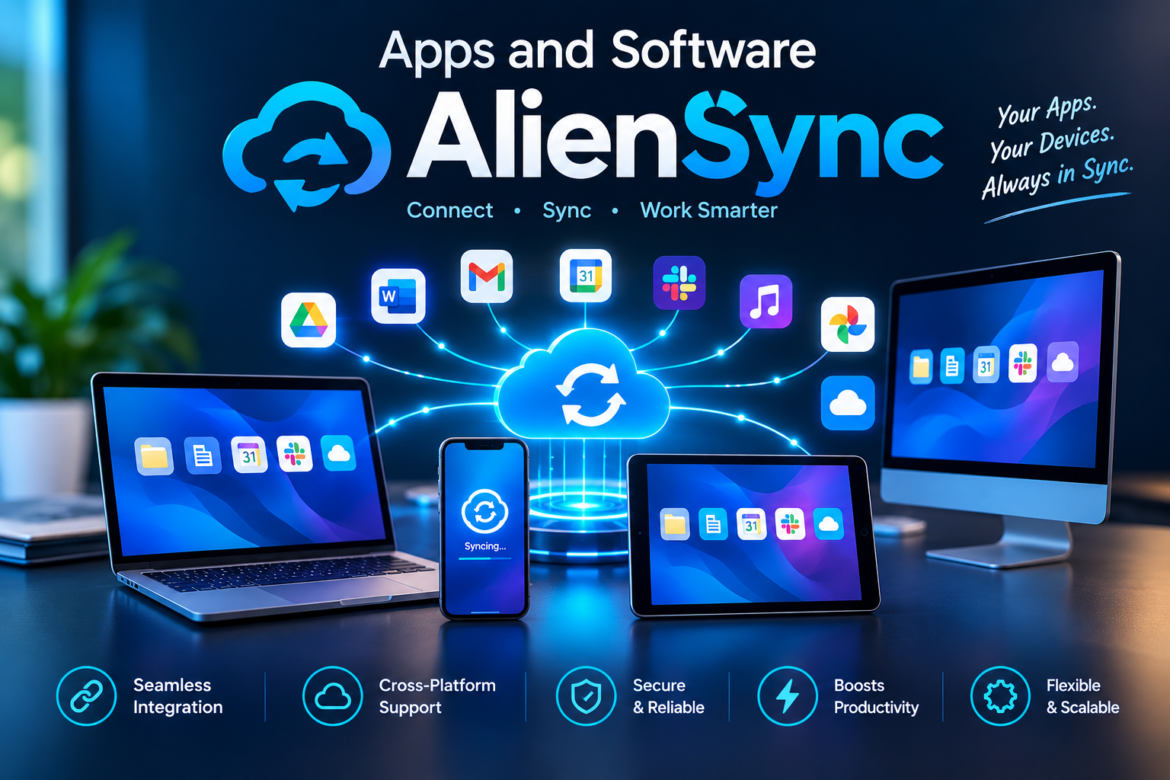
Apps and Software AlienSync: An Introduction to Modern Digital Synchronization
Apps and Software AlienSync represents the growing idea of using intelligent software to connect, synchronize, organize, and manage digital information across different devices and platforms. As people increasingly depend on smartphones, computers, tablets, cloud services, and online applications, keeping information consistent across multiple environments has become an important part of everyday digital life.
AlienSync can be understood as a technology-focused concept that brings attention to seamless synchronization, automated data management, application connectivity, and a smoother digital experience. Instead of requiring users to repeatedly transfer information manually, synchronization software aims to keep selected files, settings, records, and application data updated wherever they are needed. The concept becomes particularly useful in environments where users work with several devices or depend on multiple applications at the same time.
What Does Apps and Software AlienSync Mean?
The phrase Apps and Software AlienSync combines three important ideas: applications, software, and synchronization. Applications are the tools people use for communication, productivity, entertainment, education, business, and other activities. Software provides the underlying instructions and systems that allow these applications to operate.
Synchronization connects information between different locations so that changes made in one place can potentially appear in another. When these concepts work together, users can create a more connected digital environment. For example, someone might begin working on a document on a desktop computer and later continue from a tablet. A synchronization system can help ensure that the latest version of the document is available without requiring the person to manually copy the file every time.
Why Synchronization Has Become So Important
Digital information is no longer stored in one location. A single person may use a smartphone for communication, a laptop for work, a tablet for reading, and cloud-based applications for storing documents. Businesses may operate dozens or hundreds of applications that share information across departments. Without synchronization, keeping these environments consistent can become difficult and time-consuming.
Apps and Software AlienSync reflects the demand for systems that can reduce this complexity. Synchronization can help minimize repetitive tasks, improve access to current information, and create a more continuous user experience. When properly designed, synchronization allows technology to work more naturally around the user’s workflow rather than forcing users to repeatedly adjust their workflow to accommodate different systems.
How AlienSync-Style Software Can Connect Applications
One of the most interesting aspects of synchronization software is its ability to connect separate applications. Different programs often store information in different formats and use different methods for managing data. A synchronization layer can potentially act as a bridge between these environments. For instance, a calendar application might share scheduling information with a productivity platform, while a cloud storage service could synchronize selected documents with a desktop application.
This type of connectivity can reduce duplicated work and make information easier to access. The effectiveness of such a system depends on how well the applications communicate, what permissions are available, and whether the synchronization process can correctly identify changes.
The Role of Cloud Technology in AlienSync
Cloud computing has significantly changed how synchronization works. In older computing environments, users often had to transfer files directly between devices using cables, removable drives, or local networks. Cloud technology introduced a different approach by allowing information to be stored on remote infrastructure and accessed through the internet.
Apps and Software AlienSync can be associated with this broader shift toward cloud-connected applications. When information is stored through a cloud-based system, multiple authorized devices can potentially access the same updated information. This approach can make synchronization more convenient, particularly for people who regularly switch between devices. However, cloud synchronization also makes security, account protection, privacy, and reliable internet access important considerations.
Apps and Software AlienSync for Personal Productivity
For individual users, synchronization can simplify many everyday activities. A person may keep notes on a phone, create tasks on a laptop, and review appointments on a tablet. Without synchronization, each device could contain a different version of the user’s information. A connected software environment can help bring those pieces together.
Productivity applications can use synchronization to maintain current task lists, notes, calendars, documents, bookmarks, and other information across approved devices. This can reduce the need to remember where specific information was created. Instead of thinking about individual devices as separate environments, users can treat them as different access points to a connected digital workspace.
AlienSync and Business Workflows
Businesses have even greater reasons to use synchronization technologies. Modern organizations often depend on customer relationship management systems, accounting platforms, project management applications, communication tools, cloud storage, human resources systems, and analytics platforms. If these systems do not share information effectively, employees may need to enter the same data multiple times.
That process increases administrative work and can create inconsistencies. A synchronization-oriented solution can help organizations move relevant information between applications while reducing repetitive data entry. For example, information recorded by a sales team might need to become available to a customer support department. When systems are properly integrated, employees can work from more consistent information.
Data Synchronization and Real-Time Updates
One major feature associated with modern synchronization software is the ability to provide updates quickly. Traditional synchronization may occur at scheduled intervals, while newer systems can be designed around near-real-time communication. Real-time or near-real-time synchronization can be useful when multiple people need to work with changing information.
Imagine a project where several team members update tasks throughout the day. If each person sees an outdated version of the project, misunderstandings can occur. A synchronization system can help distribute changes so that authorized users have access to more current information. The exact speed depends on the software architecture, network conditions, server performance, and synchronization rules.
Managing Conflicts During Synchronization
Synchronization is not simply about copying information from one place to another. One of the most challenging issues is handling conflicting changes. Suppose a user edits a document on a laptop while another authorized device changes the same document before the first update reaches the synchronization service.
The system must determine how those changes should be handled. Some platforms use timestamps, version histories, merge systems, or conflict notifications. Others may create separate versions so that users can decide which information should be retained. Effective conflict management is essential because poorly handled synchronization can result in missing information, duplicated records, or unexpected changes.
Security Considerations for Apps and Software AlienSync
Security should be a central consideration whenever software synchronizes information. Data moving between applications and devices may include personal documents, business records, account details, or other private information. Secure synchronization systems generally need strong authentication, access controls, encryption, and appropriate permission management.
Users should also understand which applications have permission to access synchronized information. A convenient connection is not necessarily a safe connection if permissions are too broad. Organizations should establish clear policies about which data can be synchronized, who can access it, and what happens when an employee leaves the organization or loses a device.
Privacy and User Control
Privacy is closely connected to synchronization. Users should have a clear understanding of what information is being collected, where it is stored, and which applications or devices can access it. Apps and Software AlienSync can provide convenience, but convenience should not eliminate user control.
Good software design gives users meaningful settings for selecting what gets synchronized and what remains local. For example, someone may want documents synchronized between a work computer and tablet but may not want certain private files copied to every connected device. Transparent privacy controls help users make informed decisions about their digital information.
Cross-Platform Compatibility
People rarely stay within a single technology ecosystem. Someone might use one operating system on a desktop and another on a mobile device. Businesses can also operate mixed environments because employees may use different hardware and software. Cross-platform compatibility therefore becomes an important characteristic of modern synchronization tools.
A solution designed to work across different operating systems and application environments can provide greater flexibility. Apps and Software AlienSync can be viewed within this broader movement toward technology that focuses on interoperability instead of locking information into one environment.
Synchronization Beyond Files
Many people associate synchronization with files, but the concept extends much further. Modern applications can synchronize settings, contacts, calendars, messages, preferences, databases, tasks, media libraries, and other forms of information. Some systems may also synchronize application states, allowing users to continue an activity from another device.
This broader approach creates a more continuous digital experience. Rather than simply moving files, synchronization can help coordinate multiple elements of a user’s digital environment. This is especially valuable when applications are designed to exchange structured information rather than simply copying folders.
Automation and Intelligent Synchronization
Automation can make synchronization more powerful. Instead of requiring users to manually choose every action, software can apply predefined rules. For example, a system might automatically synchronize selected project folders while excluding temporary files. It could prioritize important information or schedule synchronization when network conditions are suitable.
More advanced systems may use intelligent rules to identify patterns and determine which information requires attention. The goal is not to remove user control but to reduce unnecessary manual work. Well-designed automation can make synchronization feel almost invisible while still allowing users to review and modify important settings.
The Importance of User-Friendly Design
Technical capability alone does not guarantee that synchronization software will be useful. If the interface is confusing, users may struggle to understand what is synchronized and where their information is stored. A well-designed application should make important settings understandable without requiring users to have advanced technical knowledge.
Clear status indicators, understandable error messages, simple account controls, and accessible synchronization settings can improve the overall experience. For Apps and Software AlienSync to be practical for a broad audience, usability needs to remain as important as technical functionality.
Performance and Resource Management
Synchronization can consume network bandwidth, storage capacity, processing power, and battery resources. This becomes especially noticeable when applications synchronize large files or large collections of data. Efficient synchronization systems can reduce unnecessary transfers by identifying only the information that has changed.
Incremental synchronization is one approach that can prevent entire files from being transferred when only a small portion has been modified. Resource management is particularly important on mobile devices, where battery life and cellular data may be limited. Users should have options for controlling synchronization frequency and network usage where appropriate.
Offline Access and Synchronization
Reliable synchronization should also consider situations where users do not have an internet connection. Offline functionality can allow users to continue working with previously synchronized information. When connectivity returns, the system can attempt to upload new changes and retrieve updates made elsewhere.
This process can become complicated when multiple changes occur while devices are offline, which makes conflict management especially important. Offline support can nevertheless provide a major advantage for people who travel, work in locations with unreliable connectivity, or simply want uninterrupted access to important information.
Synchronization in Remote and Hybrid Work
Remote and hybrid work have increased the importance of connected digital tools. Employees may work from homes, offices, coworking spaces, or while traveling. They may also switch between personal and company-managed devices depending on the situation. Synchronization can help employees access the information they need across approved environments.
However, organizations must balance convenience with security. Company policies should determine what information can be synchronized and which devices are permitted to access it. Proper identity management and permission controls are particularly important when information crosses multiple networks and locations.
Common Challenges With Synchronization Software
Although synchronization offers many benefits, it can also introduce challenges. Conflicting edits, duplicated files, accidental deletions, connectivity problems, storage limitations, incompatible applications, and authentication failures can all interrupt the process. Another issue is that users may assume synchronization automatically means backup.
These are not always the same thing. A synchronized deletion, for example, may also be reflected across connected devices. For important information, users may need a separate backup strategy that preserves historical versions and protects against accidental or malicious changes.
How to Choose an AlienSync-Oriented Software Solution
When evaluating synchronization software, users should consider their actual requirements rather than focusing only on the number of features. Someone who only needs document access may have different needs from a business that wants multiple applications to exchange structured data.
Important considerations include supported platforms, integration options, security controls, privacy policies, storage requirements, conflict handling, offline functionality, automation capabilities, and ease of use. It is also useful to understand whether the software supports export options and whether users can retrieve their information if they decide to change services later.
The Future of Apps and Software AlienSync
The future of synchronization is likely to involve deeper application integration, more intelligent automation, stronger security controls, and increasingly seamless experiences across devices. As software ecosystems continue to expand, users will expect applications to communicate with one another without requiring constant manual intervention.
Artificial intelligence and machine learning may also contribute to smarter data organization and synchronization decisions, although these technologies introduce additional questions about privacy, transparency, and control. The central objective will remain the same: helping people access accurate and relevant information when and where they need it.
Why Interoperability Matters
Interoperability is one of the broader principles behind modern synchronization. When applications can communicate using compatible standards and interfaces, users have more freedom to choose the tools that fit their needs. Instead of keeping information trapped within isolated applications, interoperable systems can allow data to move between approved services.
This can improve flexibility for individuals and organizations. It can also reduce repetitive work because employees do not have to manually transfer information between disconnected platforms. Apps and Software AlienSync fits naturally into this larger conversation about creating digital environments where different tools can work together more effectively.
Responsible Use of Synchronization Technology
Users should approach synchronization thoughtfully. Not every piece of information needs to exist on every device, and automatic synchronization should not replace careful data management. Sensitive information deserves additional attention, especially when multiple applications or devices are involved. Users should regularly review connected accounts, permissions, storage locations, and security settings.
Businesses should establish clear data governance practices and ensure employees understand how synchronization systems should be used. Responsible configuration can help users gain the convenience of connected technology without unnecessarily increasing their exposure to security or privacy problems.
Apps and Software AlienSync as a Digital Productivity Concept
Ultimately, Apps and Software AlienSync can be understood as part of a larger movement toward connected and coordinated digital experiences. The value of synchronization is not simply that information can move from one device to another. Its greater value comes from reducing friction between applications, devices, and workflows.
When synchronization works correctly, users can spend less time managing files and more time using the information those files contain. Businesses can potentially reduce repetitive tasks, while individuals can move between devices with fewer interruptions. This makes synchronization an important concept in modern software development and digital productivity.
Conclusion: Building a More Connected Software Experience
Apps and Software AlienSync highlights an important direction in modern technology: creating software environments where information can remain consistent, accessible, and useful across different applications and devices. Synchronization can support productivity, collaboration, automation, cloud access, cross-platform workflows, and continuous digital experiences. At the same time, effective synchronization requires attention to security, privacy, permissions, compatibility, conflict resolution, and backup practices.
The strongest synchronization solutions are not simply those that move the most information; they are systems that give users meaningful control while making everyday digital tasks easier. As applications become increasingly interconnected, synchronization will continue to play an important role in shaping how people manage and interact with their digital information.
You Many Also Read: Information about FoxTPax software
1 thought on “Apps and Software AlienSync: A Complete Guide to Modern Software Connectivity in 2026”