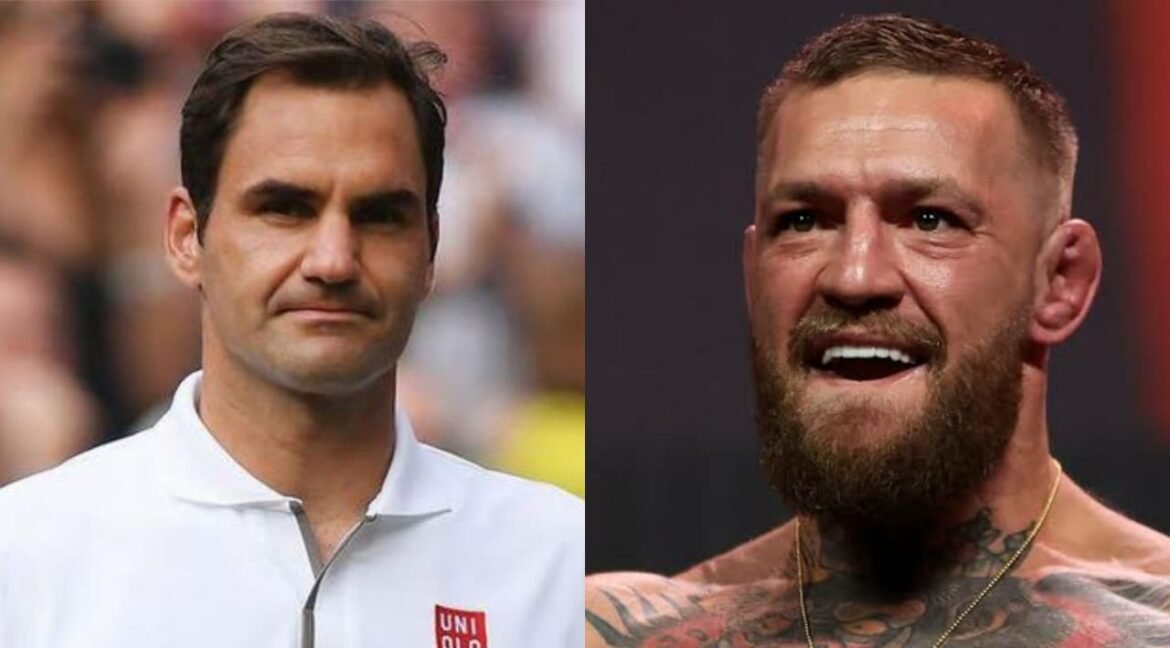
Roger Federer and Conor McGregor are two of the most recognizable names in modern sports, even though they built their careers in completely different disciplines. Federer became one of tennis’s most celebrated champions through precision, consistency, intelligence, and an exceptionally graceful style of play. McGregor transformed mixed martial arts through explosive performances, confidence, promotion, and an ability to capture global attention.
The keyword “Roger Federer and Conor McGregor” brings together two athletes whose careers demonstrate very different paths to international fame. One became associated with elegance and longevity on the tennis court, while the other became synonymous with intensity and self-belief inside the octagon.
The Different Sporting Worlds of Federer and McGregor
Roger Federer and Conor McGregor represent two sporting cultures that could hardly appear more different at first glance. Tennis is built around individual rallies, tactical adjustments, endurance, footwork, and technical repetition. Mixed martial arts combines striking, wrestling, grappling, conditioning, strategy, and physical confrontation.
Federer’s most memorable moments often involved a perfectly timed backhand, a precise serve, or an effortless movement toward the net. McGregor’s highlights frequently feature powerful left hands, creative striking combinations, dramatic finishes, and psychological warfare. Despite these differences, both sports demand extraordinary discipline and the ability to perform under enormous pressure.
Roger Federer’s Rise to Global Tennis Stardom
Roger Federer’s journey to the top of tennis developed over many years. Born in Switzerland, Federer showed considerable talent at a young age and eventually became a professional player in the late 1990s. His breakthrough period established him as a major force in men’s tennis, and his performances against the leading players of his generation helped turn him into a global superstar.
Federer eventually collected 20 Grand Slam singles titles, including eight Wimbledon championships, six Australian Open titles, five US Open titles, and one French Open championship. His achievements placed him among the most successful male tennis players in history.
Conor McGregor’s Rise in Mixed Martial Arts
Conor McGregor followed a very different route to international fame. Born in Ireland, McGregor developed an interest in combat sports and eventually pursued a professional mixed martial arts career. His rise accelerated dramatically after competing in the Ultimate Fighting Championship. McGregor became known not only for his striking ability but also for his confidence, promotional skills, and willingness to challenge established stars.
His victory over José Aldo in 2015 made him the UFC featherweight champion, and the 13-second knockout became one of the most famous moments in UFC history. McGregor later became the UFC lightweight champion and made history as the organization’s first simultaneous two-division champion.
Federer’s Philosophy of Precision
One of Federer’s defining characteristics was the apparent simplicity of his tennis. His technique often looked effortless, but that appearance concealed years of training and an extraordinary understanding of timing. Federer could change the direction of a rally with very little preparation and could use different spins, angles, and speeds to force opponents into difficult positions.
His serve was versatile rather than dependent solely on power, while his forehand became one of the most recognizable shots in tennis. His ability to adapt his game as he aged also helped extend his career at the highest level.
McGregor’s Philosophy of Timing and Distance
McGregor’s approach to fighting also relied heavily on timing. Although he possessed significant power, his success was not simply about throwing hard punches. He became famous for controlling distance, reading opponents, using movement, and exploiting openings.
His left hand became one of his most dangerous weapons, while his counterstriking allowed him to punish opponents who moved forward carelessly. McGregor also understood how to use feints and changes in rhythm to make opponents react before launching attacks. His fighting style demonstrated that speed, accuracy, timing, and anticipation can sometimes be more decisive than raw physical strength.
The Importance of Mental Strength
Mental strength is another major connection between Roger Federer and Conor McGregor. Elite individual athletes frequently compete in environments where there is nowhere to hide from mistakes. A tennis player must recover immediately after losing a point, while an MMA fighter must remain composed after taking a powerful strike or finding himself in a difficult position.
Federer became admired for his calmness during tense matches, while McGregor built part of his public identity around extreme confidence and psychological pressure. Their approaches were very different, but both demonstrated the importance of believing in one’s ability before and during competition.
Two Very Different Public Personalities
Roger Federer and Conor McGregor also became famous for contrasting personalities. Federer was frequently associated with sophistication, sportsmanship, composure, and a relatively measured public image. McGregor became known for outspoken interviews, extravagant statements, fashion, confidence, and an ability to generate headlines.
This contrast makes the pairing particularly interesting. Federer’s brand grew around excellence and refinement, whereas McGregor’s brand grew around entertainment, confrontation, ambition, and personality. Both approaches were highly effective because each athlete developed an identity that was recognizable beyond the boundaries of his sport.
Federer and McGregor as Global Brands
Modern athletes are no longer judged only by what happens during competition. Sponsorships, interviews, social media, business ventures, documentaries, and public appearances can turn sports stars into global brands. Federer became associated with major luxury and lifestyle brands and cultivated an image that extended far beyond tennis.
McGregor similarly built a commercial identity that reached into fashion, business, entertainment, and other industries. Their ability to attract attention made them valuable not only as athletes but also as personalities with enormous international audiences.
The Role of Confidence in Their Success
Confidence played a significant role in both careers, although Roger Federer and Conor McGregor expressed it in dramatically different ways. Federer generally communicated confidence through his performances and calm demeanor. He rarely needed to make exaggerated claims because his results provided the evidence. McGregor, by contrast, often expressed confidence openly and aggressively.
He predicted victories, challenged opponents verbally, and used press conferences as part of his competitive strategy. This difference illustrates that confidence does not have one universal appearance. It can be quiet and controlled or loud and provocative while serving a similar purpose.
Handling Pressure on the Biggest Stage
The biggest matches and fights can change an athlete’s legacy. Federer competed in numerous Grand Slam finals and regularly faced enormous expectations from fans and media. McGregor experienced similar pressure during his biggest UFC events, particularly when fighting for championships or against globally recognized opponents.
The ability to handle pressure is especially important in individual sports because the athlete cannot depend on teammates to correct mistakes. Both Roger Federer and Conor McGregor demonstrated an ability to perform at extraordinary levels when attention was at its highest, although their careers also showed that no athlete can dominate forever.
Federer’s Rivalries and Competitive Legacy
Federer’s legacy is closely connected to his rivalries with other great tennis players. His battles with Rafael Nadal and Novak Djokovic became defining chapters of modern tennis. These rivalries pushed Federer to continually improve and adapt. Nadal’s physical intensity and topspin-heavy game presented one type of challenge, while Djokovic’s exceptional return and defensive skills created another.
Federer’s ability to compete against different generations and styles helped make his career unusually significant. His rivalry with Nadal, in particular, became one of the most celebrated competitive relationships in tennis history.
McGregor’s Rivalries and UFC Legacy
McGregor’s career also developed around major rivalries that helped define his public image. His battles with Nate Diaz, José Aldo, Eddie Alvarez, and Khabib Nurmagomedov became major events in combat sports. Some rivalries were driven by competitive tension, while others were amplified by McGregor’s promotional style.
His two fights with Diaz created enormous attention, while his bout with Khabib became one of the most commercially significant MMA events of its era. These rivalries contributed to McGregor’s status as one of the sport’s most recognizable figures.
Federer’s Longevity and Professional Discipline
Federer’s career is often used as an example of extraordinary sporting longevity. Remaining competitive at the highest level of professional tennis for so many years required careful physical preparation, recovery, tactical intelligence, and professional discipline.
Tennis involves repetitive stress on the body, and elite players must constantly manage their physical condition. Federer’s career demonstrated that longevity is not simply about talent. It requires adapting to changing physical circumstances while maintaining the mental motivation to compete against younger athletes.
McGregor’s Influence on Combat Sports
McGregor’s influence extends beyond his individual fight record. He helped demonstrate the commercial power of personality in MMA. Before McGregor became a global superstar, UFC fighters were already becoming famous, but McGregor took promotional storytelling to another level.
He understood how to create anticipation around fights and how to turn press conferences, interviews, and social media moments into part of the event itself. His ability to generate attention helped bring new audiences to MMA and contributed to the sport’s broader popular culture presence.
Sportsmanship Versus Showmanship
Perhaps the most interesting contrast between Roger Federer and Conor McGregor is the balance between sportsmanship and showmanship. Federer became strongly associated with respectful competition and professional elegance. McGregor embraced showmanship and frequently used provocative language to promote his fights.
Neither approach exists in isolation, and both athletes understood what their respective sports audiences responded to. Tennis generally places significant emphasis on etiquette and tradition, while combat sports have historically accommodated more confrontation and theatrical promotion. Their personalities therefore developed partly in response to the cultures surrounding their sports.
What Their Careers Teach About Excellence
Looking at Roger Federer and Conor McGregor together reveals that excellence can take many forms. Federer demonstrates the importance of technical refinement, patience, consistency, and long-term development. McGregor demonstrates the value of confidence, ambition, adaptability, and the ability to seize opportunities.
Their careers also show that becoming exceptional requires more than natural talent. Both athletes invested enormous amounts of time into preparation and competition. Their stories remind aspiring athletes that talent may create an opportunity, but sustained effort determines how far that opportunity can go.
The Importance of Timing in Sports Careers
Timing affected both careers in important ways. Federer entered the professional tennis scene during a period when several great players were competing at the highest level. His emergence eventually helped define an era of extraordinary men’s tennis.
McGregor similarly entered MMA during a period when the UFC was expanding internationally and digital media was becoming increasingly important for athlete promotion. His personality and fighting style fit that environment particularly well. In both cases, talent met an opportunity to influence a rapidly changing sporting landscape.
How Fans Connect With Their Stories
Fans often connect with athletes not simply because of trophies or victories but because of the stories surrounding those achievements. Federer’s story includes his transformation from a talented young Swiss player into a global tennis icon, his battles with other all-time greats, and his eventual farewell to professional tennis.
McGregor’s story includes his rapid rise from a promising Irish fighter to a UFC champion and international celebrity. These narratives provide emotional context to their accomplishments and help explain why their names remain recognizable even among people who do not regularly follow tennis or MMA.
The Business Side of Their Careers
Roger Federer and Conor McGregor also illustrate how elite athletes can build financial and commercial success outside competition. Federer developed partnerships with major international companies and invested in projects connected to his personal brand.
McGregor expanded into entrepreneurial ventures and used his enormous public profile to promote products and businesses. Their commercial careers demonstrate the importance of building a recognizable identity. In modern sports, an athlete’s influence can continue generating opportunities even when competition becomes less frequent.
Their Influence on Younger Athletes
Younger athletes can learn different lessons from Roger Federer and Conor McGregor. Federer represents the value of technical mastery, professionalism, patience, and maintaining composure under pressure. McGregor represents self-promotion, fearlessness, ambition, and the importance of believing that extraordinary goals are achievable.
Young competitors may not copy either athlete completely, but they can identify principles that apply to their own careers. Preparation, confidence, adaptability, and resilience are useful regardless of whether someone plays tennis, practices martial arts, or competes in another field.
Why the Federer and McGregor Comparison Is Interesting
At first, Roger Federer and Conor McGregor may seem like an unusual pairing. One is a tennis legend celebrated for elegance and consistency, while the other is an MMA star known for striking power and outspoken personality. Yet comparing them reveals several common themes.
Both became international celebrities through individual competition, both understood the importance of mental preparation, both developed powerful personal brands, and both competed during periods of enormous growth in global sports entertainment. Their differences make the comparison even more valuable because they show that there are multiple routes toward sporting greatness.
Legacy Beyond Competition
The lasting legacy of Roger Federer and Conor McGregor will ultimately extend beyond individual wins and losses. Federer’s name is likely to remain connected to one of the greatest eras in tennis and to the idea of elegance in elite sport.
McGregor’s legacy will include his role in transforming the commercial and promotional side of MMA while becoming one of the sport’s most famous competitors. Their careers also demonstrate that athletes can influence culture, fashion, entertainment, business, and social media. The impact of a major sports figure can therefore continue long after the final match or fight.
Conclusion: Two Icons, Two Paths to Greatness
Roger Federer and Conor McGregor followed completely different paths, yet both became global sporting icons. Federer built his reputation through exceptional tennis, consistency, tactical intelligence, professionalism, and a career filled with historic achievements. McGregor built his through elite fighting ability, confidence, charisma, promotion, and an extraordinary ability to attract worldwide attention. Their contrasting personalities and sporting disciplines make the comparison fascinating.
Federer shows how quiet excellence can create an enduring legacy, while McGregor demonstrates how confidence and personality can transform an athlete into a global phenomenon. Together, their stories illustrate that greatness is not defined by one particular style. Whether expressed through a perfectly executed tennis shot or a perfectly timed strike, sporting greatness comes from the combination of talent, preparation, mentality, opportunity, and the determination to perform when the entire world is watching.
You Many Also Read: Joey King Height
1 thought on “Roger Federer and Conor McGregor: Two Icons From Two Different Worlds”